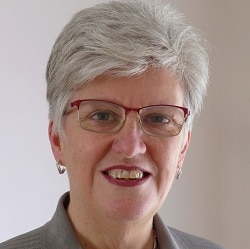
Roberton: No halfway house on independent regulation
Reforms to the way legal services are regulated north of the border, including the introduction of alternative business structures (ABSs) with majority non-lawyer ownership, moved a step closer last week.
The Scottish Parliament’s equalities, human rights and civil justice committee also backed legal protection for the term ‘lawyer’, despite opposition from the Competition and Markets Authority (CMA).
The process began with a review by Esther Robertson in 2018, which recommended a single independent regulator for all legal services in Scotland, but a Scottish government consultation found that views were polarised on this idea.
It decided in December 2022 that the best way forward was for each professional body to have an independent regulatory arm accountable to the Scottish Parliament or the Lord President, head of the judiciary.
The equalities, human rights and civil justice committee, the lead committee of three that have scrutinised The Regulation of Legal Services (Scotland) Bill, acknowledged that the Scottish government had attempted to find a compromise on regulation.
“We are not convinced that such a compromise is possible between the competing positions nor that it has been achieved in this Bill as drafted.”
Ms Roberton told the committee that there could be no compromise: “Either you believe in independent regulation as I do, or you do not. There is no halfway house.”
The committee noted the “conflicting positions of the legal profession and consumer groups and others to the setting up of an independent regulator” and that the bill “appeared to satisfy neither group”.
However, some reform of the regulatory framework was “long overdue having been discussed for over a decade”.
On ABSs, the bill aims to update the rules for ‘licensed legal services providers’ set out in the Legal Services (Scotland) Act 2010 but never actually implemented, reducing the requirement that ABSs have majority lawyer ownership to a minimum of 10%.
The committee said “no satisfaction explanation has been given” for the figure of 10%, and it “could limit the number and types of investors who might invest in ABSs”.
ABSs would no longer be required to offer legal services for “fee, gain or reward”, opening the door to charities, and the ban on law centres becoming ABSs would be removed.
As south of the border, the title ‘solicitor’ is protected by law. Under the bill, it would also become an offence to use the title ‘lawyer’ with intent to deceive when providing legal services to the public for fee, gain or reward.
The committee noted opposition from Ms Roberton, who commented that “we should not legislate on the basis of one or two bad apples”, and the CMA, which said it may “make it harder for unlicensed providers to advertise and promote” unreserved services.
However, the committee said it was important for consumers to “understand and be absolutely clear what service they are being offered and by whom”.
“It agrees that confusion exists amongst consumers within the current landscape and asks the Scottish government to look at ways to reduce this confusion.
“It also heard concerns about potential unintended consequences for regulation particularly in relation to academic lawyers who give legal opinions. On balance however, the committee supports the regulation of the term ‘lawyer’.
“However, it asks the Scottish government to give further consideration as to whether an exception to the rule for academic opinion may be appropriate.”
The committee agreed with extending the Scottish Legal Complaints Commission’s powers so that it could investigate unregulated legal services, and creating a voluntary register of unregulated providers – although suggested the government consider making it compulsory to ensure consumer protection.
The committee added that it shared concerns expressed about the powers proposed for Scottish ministers to intervene in legal services regulation.
“While unresolved, it is unable to meaningfully reach a conclusion on whether or not amendments at stage 2 [of the legislative process] will resolve these issues satisfactorily due to an absence of detailed information on what is going to be proposed.”