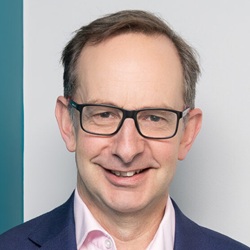
Wort: We use our legal skills to do good for society
A purpose-led law firm that wants to double its social impact by 2030, rather than its turnover, has attributed growing commercial success to its sustainability strategy.
Anthony Collins, which has been a B Corp since 2022, has set out to become the UK’s leading social purpose law firm.
B-Corp – which is short for Benefit Corporation – is a certification which requires the firm to meet certain social and environmental performance standards in a bid to balance profit with purpose.
Speaking to Legal Futures, senior partner Matt Wort said “success” ultimately was not what he and his colleagues were paid, nor how much money the firm turned over each year, but the real-world impact that the firm has on peoples’ lives around the country.
“We want to be a sustainable business. Anthony Collins is committed to social purpose and the way we live out that purpose is through the client work that we do,” he explained.
“It gives a good level of assurance that we’re a B Corp. It shows that we are not just talking the talk, that there’s something deeper behind it.
“But it’s not our leading message for clients. Our leading message is we really get your sectors. We use our legal skills to do good for society, through the really important work that we do, and we’ve structured the sectors that we work in around that. Clients really buy into that message.”
From its headquarters in Birmingham, the firm has worked in housing, healthcare, charities, education, local government and social businesses for over 50 years. It employs 390 people and turns over £34m a year and also has offices in Manchester, Macclesfield and Wolverhampton.
Mr Wort predicted “significant growth” in all of its key sectors.
He said: “We grew by 12% last year. Doubling our turnover by 2030 would require 15% growth in turnover a year – but that isn’t the target. The target is doubling our social impact over the next five years.”
The senior partner said in the last 12 months the firm acted on 9% more cases and no longer took on matters “that don’t serve our purpose”.
“We are mindful that the more work we’re doing – obviously – the greater the impact we are going to have. The two things are just so clearly aligned in terms of us achieving the growth of our social impact and the commercial targets that we’ve set.”
The firm is putting the final touches to a new way of measuring its social impact by ‘scoring’ how many people benefit as a result of its legal work, and how much this changes their lives.
The figures will enable Anthony Collins to plan its purpose-led work in the sectors it operates in, to deepen its social and environmental impact.
Mr Wort said: “For example, a childcare matter – where we’re acting for children in care proceedings – will impact a small number of people, but the case will have quite a depth of impact on those people in their lives.
“Whereas a corporate transaction in health and social care – a charity rescue for example, where the charity couldn’t continue to provide services and we acted to make the transaction carry over – there is quite a big impact there in terms of the numbers of people, but perhaps not quite the same depth as in the childcare matter.”
With its close connection to housing, healthcare and education, offices in the Midlands and North-West and a new ‘presence’ in London – a meeting space Mr Wort called “a small step at this stage” but part of the firm’s growth strategy longer term – the firm is expecting the new Andy Burnham government to add to its social impact and growth in the coming years.
Mr Wort said: “There’s lots of policies that Labour have got which are really positive from our perspective. Policies around neighbourhoods cross over with our local government team and our social business team.
“When the last Labour government introduced the New Deal for communities, we did all sorts of work supporting community organisations to grow and develop. We’ve still got the same expertise in people who were around at that time, so we’re hoping to play a part there.”
Sustainability and social purpose have proved to be powerful recruitment tools too, as well as helping to win clients.
Mr Wort said: “It draws people to us, and when they join, they find that it’s real. When people are following what they’re passionate about, and wanting to make an impact, they want to do a great job.”
And sustainability has shaped how much the firm’s 40 partners earn.
Mr Wort said: “We don’t lead with what we’re doing in relation to profit. Profit is a core strand of our sustainability strategy.
“We need to generate sufficient profit to continue to invest in all that we need to grow in the future, and to pay our partners an appropriate rate for their level of expertise, but that isn’t what is driving the firm.
“There is certainly a desire to see growth here during the years of the 2030 strategy. In terms of how that turns into commercial success, the partners have set a target profitability range. We have said, recognising the impact that we want to have, this is the range we should be aiming for in terms of profit for our partners. That’s a core part of what sustainability looks like for us.”