


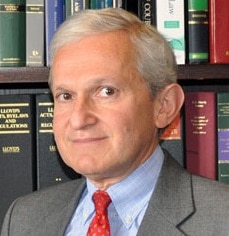
Vos: Proportionate, risk-based approach
The use of AI in preparing witness statements and expert reports should be declared to the court, the Civil Justice Council (CJC) has recommended.
It also called for urgent work to consider guidance for litigants in person (LiPs) using the technology.
A consultation issued earlier this year proposed that litigators should have to declare that they did not use AI in preparing witness statements for trial.
But otherwise, so long as documents such as statements of case and skeletons bore the name of the legal representative who was taking professional responsibility for them, they should not have to declare any aid from AI.
The final report maintained that position, concluding that “the starting point for the regulation of AI use in the preparation of court documents should remain with legal representatives and their professional regulators”.
It said the regulators, including the Legal Services Board, “should explore the possibility of devising and issuing joint guidance and ensuring that professional training requirements (including any future mandatory continuing competency ethics training) include suitable guidance on responsible AI use”.
This should be supplemented by a practice direction, drafted by the Civil Procedure Rule Committee, that should “adopt a functional, risk-based approach to AI use”.
The report explained: “It should consolidate and clarify the court’s existing approach to the accuracy and verification of, and responsibility for, AI use by legal representatives.
“It should also provide guidance on the existing sanctions for misuse of AI, as well as guidance on AI use in specific contexts, e.g. witness statement preparation and, subject to the outcome of the deliberations of the disclosure review working group that is currently considering revisions to PD 57AD, disclosure.”
Where a witness statement was from a witness of fact, they should have to declare that it has not been prepared through the use of an AI tool that has “generated or influenced its substantive content”.
The working group behind the report said: “This is to secure the integrity of the witness’s evidence; to ensure that the evidence is given in their own words.”
The focus was on “the result of such use, not on the use itself or the tool that produces the result”, it stressed.
Witness statements prepared and signed by legal representatives would not be caught unless they were given as a witness of fact.
In the interests of transparency, expert witnesses should have to make a similar declaration, containing enough detail “to enable the expert’s evidence to be scrutinised and tested effectively by opposing parties and the court”.
While a consideration of the use of AI by LiPs was outside the working group’s terms of reference, the consultation responses called for guidance anyway and so it recommended that the CJC, working with the rule committee, should consider this “as a matter of urgency”.
The working group was chaired by incoming Master of the Rolls Sir Colin Birss, who recently suggested that strict page limit on outlining the case would help judges struggling to cope with LiPs using AI to draft their claims.
Sir Geoffrey Vos, the Master of the Rolls and CJC chair, said: “AI has the potential to support the effective administration of civil justice, but its use must not compromise the accuracy, reliability or integrity of material placed before the court.
“The report proposes a proportionate, risk-based approach which maintains professional responsibility while introducing targeted safeguards where they are needed.”
It comes in the wake of a recent High Court decision where the judge expressed concern about the expert’s use of Microsoft Copilot in drafting her report in care proceedings for three children.
Her Honour Judge Flexman in Truro said she was concerned that the use of AI to generate an entire report from notes strayed into being “AI authorship”.
She said: “I accept that the primary material was [the expert’s]. AI was not asked to write a report on its own, it used her source material. But this is a higher risk approach which in my view impacts on the weight that can be attached to her written document.
“I am also concerned about the lack of effective safeguarding – the inclusion of Copilot’s own summary demonstrates that there has not been adequate human oversight of the contents of the report.”
This, along with the expert’s oral and written evidence, meant the judge did not feel able “to place any significant weight on her evidence”.
Earlier this month, Sir Colin issued a position statement on the judicial use of AI, which described the approach as “cautious but positive”.












Leave a Comment