


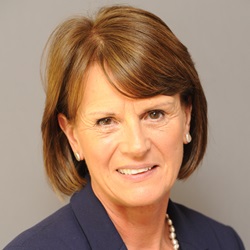
Willetts: Complainant case fee might prove a deterrent
The Legal Ombudsman (LeO) should introduce a nominal complaint fee of £50 to “weed out those whom one might describe as ‘chancers’”, Birmingham Law Society has proposed.
This would “filter out those complainants whose complaints are entirely without merit but who consider it worthwhile to complain in the hope that the law firm will make a nuisance payment to rid themselves of the problem”.
Legal aid clients would be exempt from the fee given access to justice concerns.
The society’s professional regulation committee went on: “Any sensible steps that can be taken to lessen the load would be welcomed as these complaints impose a financial burden on law firms and the LeO that is not in the best interests of the public or the profession.
“The overloading of the free ombudsman scheme is in itself an access to justice issue as the frivolous complaints prevent serious complaints being investigated at an earlier stage.”
The committee made the call in its response to LeO’s proposal to increase its case fee – payable when it upholds a complaint and determines that the lawyer did not take reasonable steps to resolve it before it reached LeO – from £400 to £600.
The first increase since LeO was established in 2010, it marked a step back from the previous suggestion to double the fee.
Birmingham’s response agreed with the increase in the case fee as an inflationary rise. Jayne Willetts, chair of the committee, described it as “eminently sensible”.
She went on: “As with all public services free at the point of access those who abuse the system increase costs for everyone. A complainant case fee may just prove a suitable deterrent to unmeritorious complaints.”
In its response, the national Law Society agreed that £600 represented “a more balanced and proportionate approach” than £800, but warned that it could still result in some law firms pulling out of legal aid and conveyancing work.
The society said it recognised the need for LeO to maintain “financial sustainability and operational effectiveness”, and supported “a measured increase in the case fee that reflects inflationary pressures”.
However, firms doing legal aid or conveyancing work were “often working at marginal rates, once running and compliance costs are factored in”.
Increasing the case fee “even to £600 could have a material impact on some firms, potentially resulting in some firms stopping such work as they consider it no longer viable”.
This could lead to “more ‘advice deserts’ or costs potentially being passed on to consumers”, reducing their ability to seek early advice.
As a result, it urged LeO to conduct a full equality impact assessment on the increase.
But the Law Society supported the use of the case fee “as a behavioural tool to promote early and effective resolution of complaints within firms, provided it does not disproportionately affect those operating in high-risk or contentious areas of law”.
Both responses backed the proposal that the case fee be reviewed every five years.
Richard Atkinson, president of the Law Society, commented: “We recognise the importance of ensuring LeO is adequately resourced; however, it is essential that costs imposed on legal service providers are reasonable, proportionate, fair and predictable.
“We are pleased that LeO has reconsidered its earlier proposal and now seeks a more modest increase that aligns more closely with inflation.”
 Rosemary chadwick











You are weeding out the poor not the chancers.