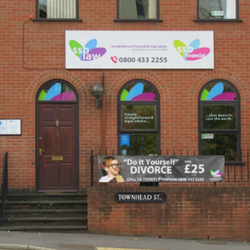
SSB: SRA received first report in June 2020
The Solicitors Regulation Authority (SRA) has apologised for failures in its oversight of SSB Law and is set to be censured for them by the Legal Services Board (LSB).
The long-awaited independent review [1] commissioned by the LSB said the SRA “missed opportunities” to step in earlier than it did in October 2023, having received the first complaints about the Sheffield firm’s handling of cavity wall insultation (CWI) claims in June 2020.
In April 2023, an SRA investigation concluded SSB was financially stable, despite several indications that it was actually “in dire financial straits”, such as it owing £128m to litigation funders at high interest rates (one at 32% per annum over LIBOR).
From October, the SRA oversaw its closure and SSB finally collapsed into administration in January 2024, by which time it owed funders more than £200m.
“The SRA failed to coherently draw together all the information which it held about SSB, failed to adequately assess the reports it received, and failed to carry out effective investigations in response to [them],” said the review, written by Northern Irish law firm Carson McDowell.
The LSB has set its enforcement process in motion to issue a public censure to the SRA and put performance targets and monitoring in place.
These will add to the directions it imposed [2] to improve the SRA’s performance in the wake of the shortcomings identified in last year’s Axiom Ince report [3], also produced by Carson McDowell.
It will be only the second time the LSB has issued a censure; the first was given to the Law Society in 2018 [4] over governance arrangements that could have interfered with the SRA’s independence.
As well as apologising, the SRA has accepted in full the recommendations to improve its operations made by the review.
We have detailed what the review found and recommended [5], as well as a timeline of what happened [6], in separate articles.
Chief executive Paul Philip told a media briefing yesterday that “quite a lot” of the staff who made errors have since left the regulator “for one reason or another”, while others have undergone training.
There has been a significant change of personnel at the top of the SRA over the past year and Mr Philip himself retires at the end of the month. Chair Anna Bradley said its response to the review showed it accepted responsibility.
“It’s not our view that a resignation is going to help,” she said, in response to a question from Legal Futures about whether she had considered it as a sign of accountability. “We need to focus on the work in hand and ensure that the organisation changes.”
The review focused on SSB’s failure to handle thousands of CWI claims that it both sourced itself through claims management companies from January 2019 and 4,000 it took on from Pure Legal in November 2021 after that law firm went bust.
The result has been to leave many, often vulnerable, clients who thought they were protected by ‘no win, no fee’ agreements facing claims for costs running into the tens of thousands from defendants’ insurers after the cases failed.
MPs have been campaigning on the issue and complaining to the SRA, while the SSB Victims Support Group has also been bringing what happened to public attention.
The Carson McDowell review said that, between January 2019 and October 2023, when the SRA finally realised the extent of problems at SSB, it received 50 reports of problems from clients, CWI installers, the Installation Assurance Authority (part of the Cavity Insulation Guarantee Agency), other law firms, the solicitor overseeing the administration of Pure Legal, a barrister owed £260,000 by SSB, the Insurance Fraud Bureau, and other suppliers to SSB.
In essence, Carson McDowell found a failure to assess SSB holistically, with many of the reports handled individually without considering the wider picture that was building of the law firm from the multiple complaints and other information the regulator held about it, as well as the SRA’s concerns with CWI claims more generally.
The SRA had set up a working group to monitor CWI claims, called Operation Grouse, in early 2019, and issued a warning notice to the profession the following year.
Other findings included a failure to recognise clients’ vulnerabilities when they complained and evidence that the SRA treated reports from solicitors more seriously than those from members of the public.
“If the SRA had assessed the reports it received about SSB on a holistic basis, as discussed above, then this should have resulted in regulatory action being taken against SSB at an earlier stage to protect consumers and the public,” Carson McDowell concluded.
“The SRA’s failure to take effective and proactive regulatory steps at an earlier stage, in our view, constitutes a failure to act in a manner compatible with its obligation under section 28 of the [Legal Services Act 2007] to act, so far as reasonably practicable, in a way which is compatible with the regulatory objectives of protecting and promoting the public interest, improving access to justice, protecting and promoting the interests of consumers and promoting and maintaining adherence to the professional principles.”
Despite internal reservations, the SRA approved the transfer of SSB’s CWI files to JMR Solicitors, a two-partner firm specialising predominantly in conveyancing that collapsed in late 2024 after the SRA had issued a notice recommending intervention (although it did not actually happen). The cases were then transferred to yet another firm.
Richard Orpin, the acting chief executive of the LSB, told the media yesterday: “During the process of conducting the review, my colleagues and I engaged directly with the SSB victims’ group. We heard first-hand the significant human impact that these events have had on those affected.
“I want to acknowledge here the significant harm that has been caused to the victims of this tragedy, and reiterate our heartfelt sympathy for what they have been through.
“While we can’t change what has happened in the past, our intention is that the report and our action to hold the SRA to account for its regulatory failings will go some way to assure the public and the sector that lessons will be learnt and improvements will be delivered.”
In apologising on behalf of the SRA, Ms Bradley stressed “how sorry we are to all those consumers who were affected. We’re sorry, we didn’t act more quickly… The issues in our handling of this case contributed to the harm and distress suffered by so many vulnerable consumers”.
She said the regulator “fully” accepted the recommendations and was “committed to doing all we can to learn from this event and to implement” them.
Ms Bradley added that, following its own internal review last year, the SRA has already made significant changes to the way it works, many of which mirror those called for by Carson McDowell.
“We will now build on this, addressing any additional areas for improvement outlined.”
Law Society president Mark Evans said the review “once again shows the SRA as lacking grip on managing key risks and responding adequately to protect consumers”.
He continued: “The report lays bare a lack of leadership and oversight of regulatory procedures and processes at the SRA… A key concern must be the treatment of vulnerable victims by the SRA.
“We know that the SRA will imminently have new leadership and that change comes at a crucial time for the organisation, which has been severely dented by the outcome of both the Axiom Ince and SSB reviews.”
The Axiom Ince and SSB reports showed that improving systems and processes was not enough, he went on.
“[It] requires culture change and focused leadership. The sanctions by the LSB are a necessary step but strong and continuing oversight of the SRA is needed to ensure it acts on the report’s recommendations swiftly and comprehensively.
“The SRA must get back to basics and ensure its operations are joined up and focused on protecting consumers. The profession and consumers have been badly let down by the actions of SSB and the failings of the SRA.”