SDT: Lawyer jas not practised since leaving Akin Gump
A former partner in the London office of US firm Akin Gump has been struck off after making nearly £25,000 of false expenses claims.
Igor Leonidovich Krivoshekov said he had been struggling with a severe depressive illness at the time, whose symptoms included “the tendency to self-sabotage”.
Mr Krivoshekov, a cross-border transactions specialist who joined Akin Gump in late 2016 from Dentons, is a US lawyer who was admitted to the roll in 2012. He resigned in June 2018 after the firm raised questions about his expenses claims.
Akin Gump’s investigation showed that, during his time at the firm, he claimed expenses totalling £45,854, of which he inappropriately claimed £24,650. This was repaid by a deduction from the capital he received on departure.
Mr Krivoshekov admitted his wrongdoing and that he had acted dishonestly. An agreed outcome with the Solicitors Regulation Authority, approved by the Solicitors Disciplinary Tribunal, gave examples of the inappropriate claims, such as £399 for a dinner with a named client when no client was actually present, £32.86 for “several items of food and drink [which were] purely personal items”, and two Uber taxi journeys for £55.55 taken by another person where the lawyer doctored the email receipts to make them appear as if they had been sent to him.
In mitigation, Mr Krivoshekov said he had promptly admitted, accepted responsibility for and expressed regret for his conduct, co-operating with both the regulator and his firm. Since his resignation, he has not attempted to work in the legal profession.
He has been diagnosed with long-term severe depressive illness and high anxiety.
The agreed outcome said: “His symptoms during the relevant time period included sleep disturbance, related chronic tiredness, difficulties concentrating, memory problems, and other symptoms of depression as well as the tendency to self-sabotage, which manifested itself in certain irrational behaviour.
“In hindsight and with the benefit of the medical treatment (which he has now sought), he recognises that, while not an excuse, his illness impacted his judgement and contributed to his making poor decisions.”
However, Mr Krivoshekov did not contend that this amounted to exceptional circumstances such as to justify a sanction other than a strike-off.
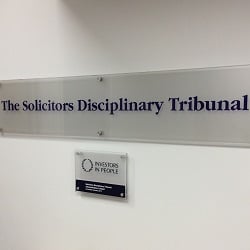
The tribunal agreed, saying: “The tribunal determined that the respondent’s admission to allegations of dishonesty required the sanction proposed, namely that he be struck off the roll of solicitors.”
Before joining Dentons in 2010, Mr Krivoshekov was a partner in the London office of Dewey & LeBoeuf, having previously practiced in its Moscow office.