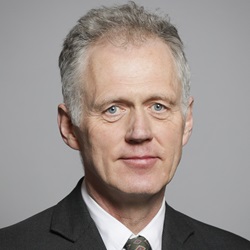
Ponsonby: We support principle behind earlier bill
The government yesterday said it recognised “an urgent need for legislation” to prevent SLAPPs but would not at this stage commit to a standalone bill.
New justice minister Lord Ponsonby of Shulbrede said the government was “now carefully considering options to tackle SLAPPs comprehensively” and establishing working parties to address them “at pace”.
The exchanges in the House of Lords on strategic lawsuits against public participation – litigation brought to stifle legitimate criticism – followed a question from Baroness Stowell, who as chair of the House of Lords communications and digital committee in the last Parliament strongly pushed for action to combat them.
She asked if the government would support a private member’s bill like the one that was going through Parliament before the election was called and it was killed off.
Lord Ponsonby described the Economic Crime and Corporate Transparency Act 2023 – which sought to curb SLAPPs relating to economic crime – as “a positive and significant step forward” and said the government was “now carefully considering options to tackle SLAPPs comprehensively” beyond economic crime.
He continued: “I am not in a position to make the commitment that the noble Baroness has asked for around when any legislation might come forward, but I reassure her that we are taking this matter very seriously.
“On the private member’s bill that fell at dissolution, we support the principle behind it. However, we believe that there are outstanding questions that need to be properly balanced.
“That is to prevent the abuse of the process of SLAPPs, about which the noble Baroness spoke, but we also need to protect access to justice for legitimate claims. It is that balance that needs to be fully worked through.
“There were live discussions with important stakeholders – for example, the Law Society – at the time of the previous private member’s bill. We have every intention of continuing those discussions as we review any potential legislation.”
Lord Browne of Ladyton, a Labour peer and Scottish lawyer, argued that “SLAPPs needed to be stopped “as soon as possible”.
Lord Ponsonby said he agreed about the risks the peer highlighted of SLAPPs stifling freedom of speech and journalists shining a spotlight on the behaviour of kleptocrat and plutocrats.
“I cannot make a commitment to a stand-alone bill, but there is nevertheless an urgent need for legislation.
“My noble friend may be interested to know that the number of Russian litigants appearing in judgments from the Commercial Court has more than halved in the year to March 2024, falling to 27 from a record high of 58.
“We believe that that is a result of the successful UK sanctions regime taking effect.”