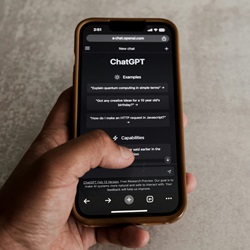
ChatGPT: Fake cases
A legal practice course graduate seeking authorisation as an immigration adviser raised concerns about his integrity by citing fake cases generated by ChatGPT, a tribunal has ruled.
If Raphael Folarin presented his own case “based on some non-existent cases and demonstrates a lack of care in verifying the legal information provided by AI, there is a risk that a similar approach may be applied to advising advice seekers”, it said.
The First-tier Tribunal was considering [1] the IAA’s decision to refuse Mr Folarin and his organisation, DSN Global Immigration Lawyers, registration as an immigration adviser.
Though immigration law is not a reserved legal activity, those who are not qualified lawyers have to be authorised by the IAA.
Mr Folarin passed the IAA’s competence assessment but it decided he was not a fit person for registration due to 11 convictions between 2008 and 2013 and insufficient evidence of rehabilitation since.
The convictions ranged from robbery and possessing a firearm with intent to commit indictable offences, to having a counterfeit currency note, driving while disqualified, failing to comply with the requirements of a community order and making off without paying.
The IAA, which has specific guidance on applications from ex-offenders, noted that some of the convictions involved “dishonesty, disobedience and a degree of violence” and Mr Folarin’s history did not suggest he was likely to comply with the regulatory scheme.
Mr Folarin appealed to the tribunal on various grounds, including that the IAA had allowed these historic convictions to override his evidence of rehabilitation, reform and positive contribution.
He represented himself and, giving the ruling of the three-person panel, Judge Harris recorded that Mr Folarin had referred to a number of decided cases in support of his points but the panel had been unable to find them.
“When asked directly if he had used AI in compiling his legal submissions, Mr Folarin said that he had. He said he had used Westlaw and a paid subscription to a legal portal on ChatGPT in doing so.
“Upon further questioning, he explained that when making a point in his submissions he had asked ChatGPT to provide him with the top 10 relevant cases supporting the points he wished to make and asked it to produce an extract from the case law which he then had edited and abbreviated in his submissions.
“Accordingly, the cases on which he had relied were ones which AI had located for him.
“He accepted that he had not read the judgments in the underlying cases and had used ChatGPT to provide him with a summary so he could understand what they say. He also used AI for additional research and to polish the wording.
“He said that he had not intended to mislead the tribunal but that he did not have the means to employ a lawyer and wanted to present his case to the best possible standard.
Dismissing the appeal, the tribunal found no fault in the IAA’s procedure, while the evidence of rehabilitation and reform was focused primarily on Mr Folarin’s personal life.
The evidence on his professional life, by contrast, was “very limited”, with no documentary proof of his oral statements that he had worked for NHS England as a paralegal and as an immigration paralegal at a firm of solicitors, among other roles.
“In all the circumstances, we considered that the evidence which Mr Folarin had provided did not outweigh the obvious concerns as to fitness raised by the criminal convictions,” Judge Harris said.
He had not shown “either his ability to comply with regulatory requirements or that, taken as a whole, he now has a history of honesty”.
Judge Harris said the tribunal also had “significant concerns about Mr Folarin’s integrity” as a result of the way in which he presented his appeal and particularly his use of AI.
“We accept that Mr Folarin is not a qualified lawyer but we heard that he has completed an LLB and the legal practice course. He also seeks registration as an immigration adviser which will, among other things, involve advising on some aspects of immigration law.
“The tribunal has concerns that if Mr Folarin presents his own case before the tribunal based on some non-existent cases and demonstrates a lack of care in verifying the legal information provided by AI, there is a risk that a similar approach may be applied to advising advice seekers, who may be inexperienced in immigration matters and/or vulnerable.
“Had Mr Folarin already been registered and conducted his case in such a way, the tribunal would have needed to consider reporting him to the IAA in any event.”
The tribunal concluded that Mr Folarin was not currently fit to provide immigration advice and that the IAA was correct to refuse his application.