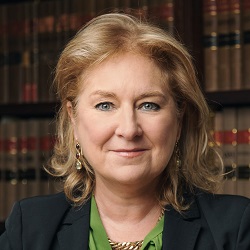
Carr: We have more to do
The Lady Chief Justice has acknowledged that a minority of judges fail to behave with the professionalism and courtesy expected of them.
Welcoming yesterday’s Harman review [1] of bullying and harassment at the Bar and on the bench, Baroness Carr said the senior judiciary was looking to take action to improve the complaints system.
The review said it received “abundant, disturbing and compelling accounts of judicial bullying”.
The Lady Chief Justice said: “While the majority of judges behave professionally and courteously, Baroness Harman’s review refers to too many examples of judicial bullying.
“Such behaviour is unacceptable and should have no place in our justice system. I am clear that the senior judiciary does not seek to excuse or minimise bullying by judges.”
The review was critical in particular of the three-month time limit for people to complain to the Judicial Conduct Investigations Office.
Judges have clear standards of behaviour, backed by training and support at all levels, particularly for those with leadership responsibilities, Baroness Carr went on.
“But we know we have more to do. We are currently reviewing the routes available to raise concerns and resolve issues and working to challenge and change unacceptable behaviour.
“We need to give those who experience bullying, harassment or discrimination the confidence to speak up knowing that something will be done and that their own career will not suffer.”
Richard Orpin, interim chief executive of the Legal Services Board, acknowledged the issues highlighted by the report, including concerns about how the Bar Standards Board (BSB) set and enforced standards.
He pointed out that “bullying, harassment and misconduct are problems across the legal sector”, meaning the review “has lessons for everyone”.
He added: “Regulators and sector leaders must act quickly and decisively to improve standards, address misconduct, and foster a safe culture across the profession.”
Mr Orpin said the oversight regulator was already taking action, including introducing new requirements [2] for regulators to make sure lawyers understand and uphold ethical duties, consulting shortly on how regulators could encourage diversity [3] and create inclusive workplaces, and monitoring the BSB against agreed undertakings to improve its performance [4], including its enforcement process.
The BSB itself agreed that the root causes of bullying and harassment at the Bar “lie in culture and the power imbalances inherent in relationships between pupils and supervisors and between senior and junior barristers”.
Director general Mark Neale said: “The report shows that the Bar must act now to make the culture change necessary to address bullying, discrimination and harassment. It’s unacceptable that the profession lacks a supportive and safe environment for all barristers and pupils.
“We also know we need to do better ourselves. We recognise the concerns that the report raises, and we are already implementing changes, and consulting where necessary, to improve our enforcement processes.
“We must also provide more support to those with the courage to come forward and make reports. We fully accept that pupils and barristers will be much more willing to come forward to report harassment if they are confident that they will be sensitively supported through a robust and transparent enforcement process with no unnecessary delay.
“We will now fully review the findings and recommendations and work with the profession and other stakeholders to help improve the culture at the Bar.”
The BSB pointed out that it was currently consulting on a re-designed enforcement process [5]. Once this is all fully in effect from January 2027, it expects 80% of investigations to be completed within 25 weeks.
Further changes aim to give the Bar Tribunals and Adjudication Service greater power to manage cases and so cut delays at that stage.
The BSB has already introduced a victim support service and will soon be training staff on a “trauma-led approach to regulatory enforcement”.
It plans also to change the rules so witnesses in cases of sexual harassment should have an automatic presumption of anonymity.
Andy Slaughter, Labour MP and chair of the justice select committee said the review “must act as a watershed moment” for the Bar.
A barrister himself, he explained: “This thorough and wide-ranging review exposes a serious and worrying degree of misbehaviour and malpractice.
“Baroness Harman has been fearless in her investigation, and it is right that the Bar Council has welcomed the outcome and pledged to act on the recommendations.”
Nick Henderson-Mayo, head of compliance at training company VinciWorks, said the recommendations were “common-sense, long-overdue reforms that simply bring barristers in line with obligations solicitors have already followed for years”.
He continued: “Mandatory anti-harassment training, equality policies, diversity data collection, and action plans; these are the bare minimum any profession should expect of itself.”
He noted the “viciousness” with which “many leading and overwhelmingly male barristers” attacked the BSB’s proposal to require barristers to “act in a way that advances equality, diversity and inclusion” – which it dropped in May [6] in the face of opposition.
“Baroness Harman’s report lays bare the scale of institutional inertia calcified in the profession. No wonder harassment is rife.
“The reality is that solicitors, accountants, doctors, all face robust duties around equality, diversity and harassment. The Bar’s resistance to even these mild steps sends an appalling message: that protecting a broken culture matters more than protecting people.”