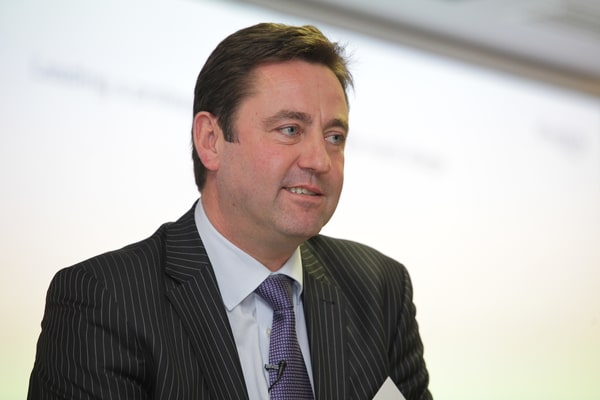
Beech: quick decisions
Turnover is up by two-thirds in the two years since James Caan invested in Staffordshire-based Knights, the firm has announced.
The firm, which has offices in Stoke, Chester and Cheltenham, has seen turnover go from £9m to £15m since receiving investment from Mr Caan’s Hamilton Bradshaw, and plans to become a top 100 law firm by 2017. It has not released its profit, however.
Staff numbers have similarly risen, with 80 recruits since 2012 taking staff numbers to more than 200.
CEO David Beech said: “Two years since Knights attracted private equity investment, our business model has facilitated both innovation and growth. Our management structure, comprising a board of commercially-focused investors, allows us to make business decisions quickly in the interests of the firm rather than individual lawyers.
“In turn, this enables us to invest in cutting edge technology and high quality recruits so that we can compete with larger professional service firms.”
Without providing the underlying numbers to give context, Knight said its property team has delivered 41% growth, while private client and personal has achieved 26%. Both employment and dispute litigation have experienced a 9% increase with the corporate and commercial practice growing its income by 15%.
Mr Beech said: “Knights is not like a traditional professional services firm. Having a specialist and experienced management team to lead and direct the firm enables lawyers to focus on delivering results for our clients. The managers manage and the lawyers practise law.”
This has led to slashing overheads – now 15% of turnover compared with 35% for most other professional service firms, Mr Beech said.
He added: “With a dedicated management team behind them, the more our people put in, the more they can earn and the more quickly they can develop their careers without waiting for longer serving colleagues to retire or step down.”