



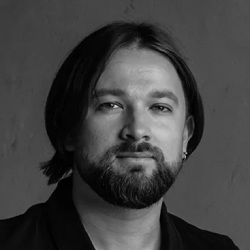
Bridges: I wasn’t planning to join another firm
A law firm that specialises in founder-led, high-growth companies – and is backed by a tech entrepreneurs’ forum – has acquired AI legal platform Tilder.
Founders Law has also hired Tilder’s founder, lawyer and developer Chris Bridges, as its chief transformation officer to lead a shift to AI-powered legal services.
Founders Law, which is regulated by the Solicitors Regulation Authority (SRA), operates as an embedded in-house legal team for venture-backed tech companies from seed to Series C.
Formerly known as Chronos Law, it rebranded in 2022 in the wake of a significant minority investment by Founders Forum Group, whose own co-founder, Brett Hoberman, also co-founded lastminute.com and Made.com.
Mr Bridges was a technology lawyer at Irwin Mitchell before helping to set up Tacit Legal, a tech and media boutique, and built Tilder, described as one of the AI-native legal services provided by an SRA-regulated law firm.
Tilder reviews contracts against a client’s own negotiating playbook, with AI doing around 80% of the work and a qualified lawyer supervising its output and providing “strategic wrap-around support”. Mr Bridges describes it as a “quasi-deterministic” model whose “correctness rate” is now more than 95%.
Tacit Legal was recently sold to Stone King but Mr Bridges exited and kept Tilder, which Founders Law has acquired along with his work on Engine Legal, which will be an AI operating system for law firms.
Mr Bridges said: “My intention with Engine was to apply what I learnt building Tacit on a greater scale, building the back office and knowledge infrastructure to power the next generation of law firms coming to market.
“Until I spent time with the Founders team, I’d ruled out joining an existing firm. Founders has something special: thoroughly decent people, an established route to market that drives growth without relying on solo contributors or VC subsidy, and an appetite to embrace change, move fast and experiment.”
He has been tasked with creating a product, knowledge and engineering team, and over the next 18 months building ‘Founders OS’, a custom operating system, embedding Tilder in its lawyers’ day-to-day work, and “packaging routine legal work into products at lower price points”.
Mr Bridges added: “With the pace of progress we’ve seen in the past 12 months, we see Tilder becoming increasingly autonomous.”
This meant offering two options to clients: as a standalone tech product for those that do not have budget for routine lawyer involvement, and as a triage tool bundled into clients’ subscriptions.
Founders Law has grown rapidly of late – by 23% last year and 40% this to a turnover of more than £5m – and also opened in the UAE last year.
Tom Bohills, who set it up, said it had moved from a model with a large number of part-time consultant solicitors to a mainly employed workforce of more than 30 people. Most of its work comes independent of Founders Forum Group.
The goal is for Founders Law to become one of the first regulated firms able to stand in for a start-up’s entire in-house legal function by combining technology with human advice where it is most valuable.
As an example, Mr Bohills said that for a client it was currently charging 60 human hours a month, the aim was to get to a position where client was billed for 20 tech hours and 20 lawyer hours, but receiving the same level of service.
AI also enabled smaller practices like Founders Law to continue working for clients as they grew for longer than they might have been able to in the past, he suggested – some of its clients have been with it from the start, in 2019.
Founders Law uses a wide range of fee models, from traditional hourly rates to custom retainers, as well as bulk buys of hours and payment by taking equity in clients.
Mr Bohills qualified at White & Case and was head of legal at fintech company Red Deer before launching the firm. He described Founders Forum Group as “incredibly good investors in the sense that they are not invasive and controlling” – by its nature it understood how to work with founders.
Mr Hoberman is also the co-founder and managing director of Firstminute Capital, which we separately report today is one of the investors putting £15m in seed funding into AI-native law firm Alecto.
He said: “Plenty of new firms are promising AI-powered legal services. Founders Law is doing it with senior lawyers from top firms and a platform that’s already proven.”











Leave a Comment