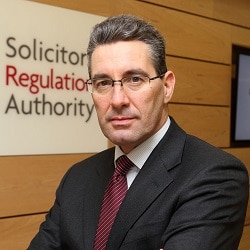
Philip: Concerned about evidence of poor practice
Law firms need to be careful in marketing their services as ‘no win, no fee’, and in how they attract clients, especially in high-volume claims work, the Solicitors Regulation Authority (SRA) told solicitors today.
The warning about marketing materials comes in the wake of the collapse of SSB Law, where clients signed up to conditional fee agreements and after-the-event insurance for cavity wall insulation claims have subsequently discovered the insurer refusing to cover the costs of losing.
This has resulted in successful defendants pursue the clients directly for five-figure costs bills, as well as calls for the term ‘no win, no fee’ to be banned.
The warning notice, Marketing your services to members of the public, says that “if your marketing material highlights the use of ‘no win, no fee’ arrangements, it should clearly explain what that means”.
It explains: “There are scenarios where consumers may become liable for costs. For example, if a client decides to discontinue a claim part way through, or if your firm does not fulfil the terms of the after-the-event insurance policies and the insurance then does not cover the costs of bringing the claim.
“You should consider the position carefully and make sure that a client’s liability for any costs is clearly explained. It should not imply that a client would not be liable for any costs where this is not the case.”
The regulator has also published a ‘no win, no fee’ guide to help inform consumer choices. It outlines key considerations, risks and questions the public should ask before entering into such agreements.
The notice also deals with SRA concerns that law firms are recruiting new clients by targeting them with unsolicited approaches and in particular not ensuring that third parties they work with – such as claims management companies and lead generators – are using tactics to recruit clients which they themselves would not be allowed to employ.
Among other things, the warning says law firms should be satisfied with the extent of informed consent given by a customer via a third party.
“For example, when customers are approached via ‘opt-in survey data’ you should be satisfied that such opt-in consent was lawfully obtained and has specifically granted permission to be contacted for the purposes of being offered legal services.
“You should be cautious about any use of ‘re-marketing’ techniques where a third party attempts to re-engage customers who initially inquired with them. Any further approaches to them to offer services may still be an unsolicited approach.”
SRA chief executive Paul Philip said: “Firms being able to promote their services is important, and can help people get access to justice. Likewise, ‘no win, no fee’ arrangements can help people to access the expert help they need. But firms must always promote their services in line with high professional standards.
“We are concerned about evidence of poor practice when firms are recruiting clients – whether that’s a failure to assure themselves that a lead has not come through a cold call, or not being clear about potential risks in taking forward a case.
“We will take action against firms who aren’t working in their clients’ best interests or who are otherwise breaking our rules.”