


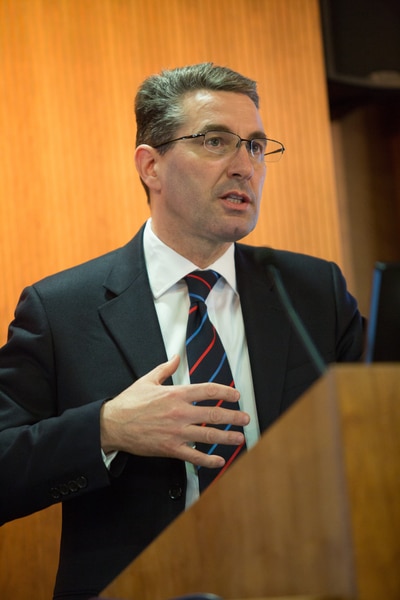
Philip: trust and confidence
The Solicitors Regulation Authority (SRA) will focus more on individual regulation and less on firms in the year ahead, chief executive Paul Philip has said.
Mr Philip said that the “personality of regulation” was changing quite significantly, driven by a mixture of new ideas and “old ones, which have failed to find their place”.
Speaking at this week’s Legal Futures Regulation and Compliance Conference, he said: “You need to focus on two basic things – trust and confidence.
“What is the worth of a solicitor? What can the public expect and what are solicitors’ professional values?”
Mr Philip said the SRA would be consulting on the issue of professionalism towards the end of this year.
Speaking after the event, he added: “It’s really important that we speak to the profession about what can be expected in terms of integrity, confidence and independence.
“Top of the tree is the obligation to the rule of law and administration of justice.
“How does this manifest itself in the daily grind? Do you think it is something that demands regulatory action, and if so, what?”
Mr Philip told the conference the SRA would also be consulting on its revised indemnity proposals in the “next couple of months”, which would include looking at whether the rules were proportionate.
On licensing multi-disciplinary alternative business structures, he said: “I think, when judged by history, this will be the most fundamental thing we have done in the last two years, and we will see major change in the legal market because of that.”
At a later conference session, Andrew Caplen, president of the Law Society, welcomed the SRA’s consultation on professionalism, which he said would fit into work the society would be doing on the issue over the next few months.
“Compliance which compromises ethical standards is not helpful at all,” Mr Caplen said. “We need to properly define and protect the brand of solicitor. The maintenance of professional standards and ethical behaviour is essential.”
Earlier in the week Lord Justice Jackson predicted that professional negligence as a discrete body of law could disappear if restrictions on the liability of professionals continued to be swept aside.











