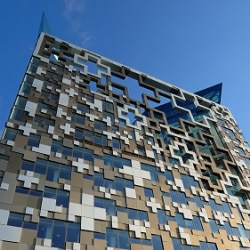
The Cube: SRA to exercise break clause
The Solicitors Regulation Authority (SRA) has decided to cut its office space in Birmingham and close its small London office, with most staff working at least three days a week from home.
In a move to permanent homeworking, it plans to reduce its current occupation of two and a half floors of The Cube in Birmingham to one and a half.
In a paper for last month’s board meeting, the regulator said its leases in Birmingham and London both had break clauses allowing them to be terminated next year.
Since the first national lockdown in March 2020, the majority of staff have worked from home, with only a “skeleton staff” at The Cube.
The move to homeworking had “gone well, and, in general, staff had settled into the changed arrangements”, with the SRA making “significant investment” in additional laptops, a “cloud-based contact centre telephony solution” and online training.
The proportion of staff “struggling at home with either their wellbeing or restricted space to work” or “in vulnerable situations” was only 2%.
The regulator said changing the way it used its workspace could encourage a “more diverse, inclusive and engaged workforce” and achieve “considerable” cost savings.
“Regardless of the pandemic, a collaborative office environment is not a new trend. Plenty of organisations already have such workspaces and can demonstrate to us what good can look like.”
The SRA said this would enable time spent in the office “to be focused on the benefits face-to-face discussion brings”, such as planning meetings, training, the “occasional one to one discussion”, team meetings and “informal ‘at the photocopier’ chats”.
A “recognition hub” would be developed to “facilitate and encourage the types of recognition that may have typically been given face to face”.
The SRA said it had asked agents Knight Frank to produce a market appraisal, which showed that the office market was “still fairly resilient” in Birmingham because of “limited availability” and the approval by the government of HS2.
The lease on The Cube was “good value” and the cost not dissimilar to out-of-town space, which would lack the transport links essential to the SRA.
Renegotiating the existing lease on The Cube, which terminates in 2033, was the preferred option, with the office space reduced from two and a half to one and a half floors.
In the case of the SRA’s small City office, the SRA said the building did not fully meet its needs in terms of meeting room layouts and accessibility, was expensive and could be replaced by “renting office/meeting space on an as-and-when basis”.
The meeting minutes recorded that board members “underlined the need to ensure that a strong sense of culture and of belonging to the organisation was maintained”.