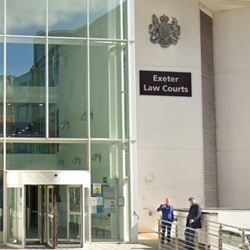
Exeter Combined Court: Conviction
A former law firm employee convicted of two assaults on colleagues in a nightclub after a work dinner has been given a conditional ban from the profession.
Ian Bond, who was a case progression officer at Devon firm Patterson Law, has been made subject to an order under section 43 of the Solicitors Act 1974, which means he cannot be involved in a law firm in future without the Solicitors Regulation Authority’s (SRA) permission.
Mr Bond joined the specialist motoring law firm in March 2019. On 1 October 2021, Patterson Law held a summer party for staff.
An SRA notice published yesterday recounted: “Afterwards, some members of staff, including Mr Bond, went on to a local nightclub. In the early hours of 2 October 2021 and while at the nightclub Mr Bond touched two of his work colleagues in an inappropriate, sexual manner.”
One of the victims made a formal complaint to the firm and an investigation put that and a number of other complaints from work colleagues to him. On 14 October, Mr Bond resigned.
A report was made to the police and, after a criminal investigation, Mr Bond was charged with two offences of assault by beating, in relation to his conduct described at the nightclub. On 15 January 2024, he pleaded guilty to both offences at Exeter Combined Court.
He was sentenced to 50 hours of unpaid community work; alcohol abstinence for 120 days, monitored electronically; participate in a rehabilitation activity as instructed by the Probation Service for a maximum of ten days; and pay his victims compensation of £500 each.
Mr Bond agreed that his conviction made it “undesirable for him to be involved in legal practice without the SRA’s prior permission”.