


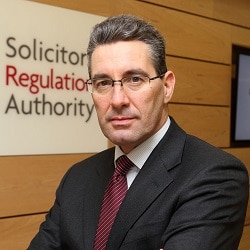
Philip: We win some, we lose some
The Solicitors Regulation Authority (SRA) will not appeal the dismissal of its prosecution of Leigh Day, its chief executive confirmed yesterday as he described the loss as “just one of those things”.
Paul Philip also refused to say how much the SRA had spent on bringing the case before the Solicitors Disciplinary Tribunal (SDT) and then appealing it to the High Court.
It was the longest and most expensive prosecution ever taken on by the regulator, with the High Court noting that the costs of the case “have become simply enormous – deep into seven figures”.
A detailed assessment of Leigh Day’s costs of the appeal has yet to be held.
All 19 charges against Martyn Day, the firm’s senior partner, partner Sapna Malik and solicitor Anna Crowther, along with the firm as a whole, were dismissed last year by the tribunal.
Last month the High Court said that “dissatisfaction on the part of the SRA with the outcome of the very protracted hearing before the tribunal below cannot of itself ground a successful appeal”.
Speaking at the regular press briefing the SRA now holds instead of letting journalists witness its board meetings, Mr Philip said he was “disappointed” by the decision, but insisted that “we took proper advice [on the appeal] and acted appropriately”.
“We did our job. The case was properly brought. The SDT and the High Court made that clear. We win some, we lose some.
“The fact is that we win the vast majority of appeals against SDT decisions… We lost one, so we move on.”
He was pressed by Legal Futures and others to say how much of the profession’s money the SRA had spent, but repeatedly refused to divulge the figure – while hinting that he may in the future.
“It is just one of those things… The fact is that we get costs awarded against firms all of the time.”
He refused to acknowledge that this prosecution was different from any other. “We’ll just have to agree to disagree,” he told Legal Futures Editor Neil Rose.
Asked whether the SRA took too much of a scattergun approach in laying so many charges before the tribunal, Mr Philip said it had two QCs involved.
But he said the SRA was analysing what lessons could be learned from the case – this will not be published. “That will be an internal housekeeping issue.”
He refused also to publish correspondence with the Ministry of Defence, saying they concerned policy issues and not the prosecution.
“We have policy discussions with government departments on an ongoing basis and actually disclosing private correspondence between us and [them] would impede our ability to speak to government departments over issues of policy.”











