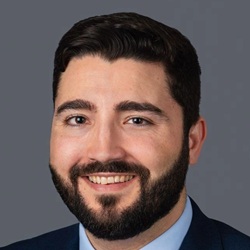
Letts: Determined to right injustice
A solicitor who asked the Solicitors Regulation Authority (SRA) to confirm how many times conditions have been placed on practising certificates because of health concerns says he is being “stonewalled” by the regulator.
Matthew Letts, a restructuring and insolvency specialist, submitted his request for the statistics on 1 March 2026, under the SRA’s transparency code.
Mr Letts is trying to help an unnamed solicitor who revealed last December in an online post that she had been barred from practising by the SRA, after details of a suicide attempt were seen in her medical records.
The anonymous post said: “They say that suicide risk means that I might lack the capacity to understand my professional duties or follow rules.”
In January, the SRA denied barring any solicitor on the grounds of a suicide attempt.
Mr Letts said he was determined to “take action to right the injustice which has been done, and get the restrictions removed, as well as potentially obtaining findings against the SRA to avoid this happening in the future”.
He has accused the SRA of exacerbating the mental health crisis in the legal profession “by stigmatising and effectively recriminalising suicide by the back door.”
He requested information held by the SRA relating to the imposition of conditions on solicitors’ practising certificates on health grounds, and specifically the frequency with which such powers have been exercised since amendments to the SRA’s regulatory arrangements relating to health and fitness to practise were approved by the Legal Services Board in 2023.
The fitness to practise regime bites when a solicitor has a health condition, that condition means they cannot safely practise or engage with the SRA’s regulatory processes, and the solicitor has not taken their own steps to manage the impact of their condition, “for instance by restricting their practice or obtaining the necessary support from their firm”.
It said back in 2022: “We will only act in those cases where this combination of circumstances comes to our attention and we are concerned that the solicitor poses significant risks to clients or the public.
“We typically manage those risks by using proportionate conditions to limit the scope of the solicitor’s practice.”
The SRA said a snapshot of its cases in 2021 showed that concerns had been raised about a health condition affecting participation in an investigation or disciplinary process in around 5% of them.
Rejecting the request, the SRA said it could not provide the information because it would take more than 18 hours of time or cost more than £450 to complete, limits set out in the regulator’s freedom of information code.
Mr Letts said: “I have been stonewalled. This should have been a simple case of providing a report in order to meet with the transparency commitments and standards the SRA says it has in place. Instead we are met with obfuscation and secrecy.”
Mr Letts, who founded Codified Strategy, a professional services tech strategy company, posted the SRA’s response on LinkedIn, asking colleagues across the profession for their opinion.
Comments said the SRA’s decision not to share the statistics was “disgusting” and “dishonest”. One solicitor accused the SRA of “a complete lack of transparency”.
The SRA’s response was written by Harry Evans, its lead information governance officer.
Mr Evans said: “Practising certificate conditions are not imposed on the basis of an individual having a health condition. Practising certificate conditions are linked to risk, suitability, compliance, and the wider public interest, rather than to any specific health diagnosis or condition.
“As practising certificate conditions are not imposed on the basis of an individual having a health condition, we do not hold recorded information in relation to these aspects of the request.”
The 2023 decision included separate rule changes to make explicit the requirement to treat colleagues fairly at work, and placed an obligation on managers to challenge any unfair treatment.
In its decision, the LSB said the SRA had confirmed it intended to assess and report on the impact of the rule changes as part of its annual reporting cycle, and also engage further with stakeholders to seek their views on their impact 12 months after they came into effect.
“We expect the SRA to meet its commitment to assess and report on the impact of the new regulatory arrangements as part of its annual reporting cycle, and to publish the results of the evaluation,” it said.
Mr Letts told Legal Futures: “These are statistics that the SRA is required to keep, and undertook to keep, when it obtained additional powers from the Legal Services Board. The SRA will have to release this information at some point. It is only a matter of time.”
“They have said it will cost too much to get this information. I have asked how much, with the possibility that I will pay the costs myself. I think the SRA think or hope I will just go away, but that will not happen.”
Mr Letts believes the case of the unnamed solicitor who attempted suicide is “the canary in the coalmine”.
When the case came to light last December, the SRA said: “We understand the regulatory process can be a challenging time, particularly for those that are already vulnerable or suffering from poor physical or mental health. If someone is struggling, we treat them with the utmost care and urgency.”
The SRA has not commented on this case since.
Mr Letts has asked the SRA to review its decision not to supply the statistics. He is expecting the outcome of this by the end of the month.