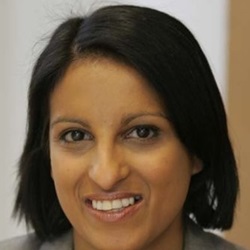
Chawla: Change is essential
Two-thirds of South Asian partners in large London law firms have experienced racial discrimination in career progression, a new report has found.
A similar proportion complained of “cliquey and exclusive behaviour in the workplace”, while a majority mentioned an “ethnic dimension” to legal networking.
Three out of 10 partners said they were unfairly denied a promotion or opportunity because of discrimination. Discriminatory behaviour in the workplace included “microaggressions”, cited by 63%, and the use of racial slurs and language, mentioned by 31%.
However, only 6% of South Asian partners said they had moved to another job or another firm because of discrimination and only one out of those polled said they had referred or reported the incident to someone who could address the issue.
Researchers said almost two-thirds of partners “do not seek redress for discrimination, finding it less stressful to ignore the incident and just carry on with their work”.
One lawyer commented: “You’d get those random comments: ‘Oh, I’ve never met anyone Asian before, or it’s funny, you don’t smell of curry.’
“When I joined no one bothered to learn my name because it was difficult. No one bothered to apologise if they got my name wrong. I cut my name down to something that people would be able to pronounce so that I would fit in. Some people anglicised their name to make it easier.”
City law firm BCLP partnered with diversity specialists Diverse Talent Networks to produce the report Stop the Talent Leak, based on responses from 48 South Asian partners working in large, London-based law firms and 15 follow-up interviews.
South Asian lawyers comprise roughly 3.3% of partners at large law firms, a 50% underrepresentation
“Personal sponsorship” was seen as central to career progression, with eight out of 10 partners mentioning how “the belief and support of one supervisor or partner had been critical to their success”.
However, two-thirds said the main factor was “their own hard work and effort”.
One commented: “It’s no good being as good as the majority group. You can’t match, you’ve got to have premium value. At university I was at the top of my class. If you were the number one in your class, they couldn’t ignore you.”
Another said: “I think it took existing partners longer to accept me as a potential fellow partner as a result of me being different, which led to a delay in promotion and question marks over loyalty, which I do not think I would have had if I had been a White, middle-class male.”
One partner commented: “One of the big reasons for leaving [my previous firm] was that I was moving into a department where the head of the team loved to drink.
“He’s your classic old school, wants to go golfing, wants to go drinking, let’s go for a beer after work kind of thing.
“I always felt excluded because they were all a bunch of blokes. And there’s so much that happens in those conversations that you miss out on.”
Researchers recommended supporting junior and mid-level South Asian lawyers with an “unbiased” work allocation process, transparency on promotion criteria and “purposeful networking, mentoring and sponsorship by a senior figure from the majority group to offer advocacy, support and advice”.
They also recommended challenging “alcohol-based networking and socialising that fuels the informal networks that can create exclusion”.
Sunita Chawla, partner and co-chair of the global inclusion and diversity action board at BCLP, commented: “The report findings provide a stark realisation that exclusion and discrimination still exist in the profession and that positive change is both essential to and necessary to ensure leadership at law firms reflect our diverse society.”
Separate research published last month highlighted how Muslim students on vacation schemes at City law firms found the “drinking culture” made it hard for them to take part in social events because of their religion.