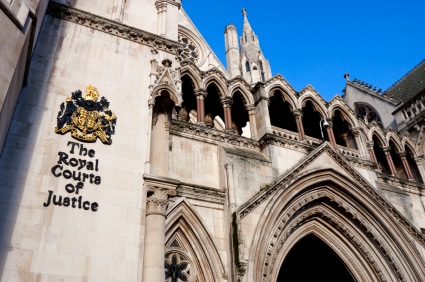
High Court: ruling on preliminary issues went for lender
Solicitors innocently caught up in frauds on mortgage lenders can find themselves liable for the whole loss if they release funds before receiving documents needed to prove title, even if the lender is negligent.
A recent High Court ruling on preliminary issues found that Markandan & Uddin, a firm of east London solicitors, was in breach of trust because it had paid out nearly £750,000 to fraudsters purporting to be solicitors for the vendor without having received the documents necessary to register title or having received a solicitor’s undertaking to provide such documents. There was no allegation that the firm was involved in the fraud.
Roger Wyand QC, sitting as a deputy High Court judge in the case, Lloyds TSB Bank PLC v Markandan & Uddin [2010] EWHC 2840 (Ch), ruled that the defendants were not entitled to relief under the Trustee Act 1925 because although they had acted honestly, they had not acted reasonably. Not only had the firm failed to obtain the necessary documents, but it had paid the money into a second account at the request of the purported solicitors for the vendor.
Furthermore, the judge said, the defendants had failed to establish properly that the purported firm had an office where it claimed to have one – which is specifically required by section A3.2 of the Council of Mortgage Lenders’ Handbook.
He said that the recoverable loss by the lender was the entire advance.
The case is likely to lead mortgage lenders who are the victims of fraud to consider claims of breach of trust when they seek to recover their losses from solicitors. If a lender can show a breach of trust, then it need not prove negligence by the buyer’s solicitor. In the past many cases seeking to prove negligence have failed due to the high standard of proof required.