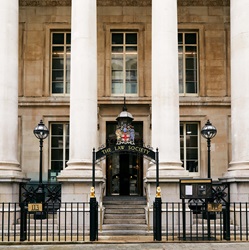
Law Society: The vote nobody wants
Solicitors yesterday received an invitation to vote on whether to increase the threshold for calling a special general meeting of the Law Society – a move it no longer supports.
As we reported earlier this month, the ruling council withdrew its backing for the motion, but there was no mechanism within the society’s bye-laws to stop the ballot.
The motion put by the council to last month’s annual general meeting to raise the number of signatures required to call an SGM from 100 to 0.5% of the membership – or 1,080 on a current membership of around 216,000 – was defeated by 72 votes to 67.
The then president, Richard Atkinson, immediately invoked the society’s bye-laws to call for a vote of the whole membership given how close it was.
It later emerged that council members were not aware that this was the plan in the event of losing; the council’s support for the motion was withdrawn after a vote at a special meeting called by 25 members.
Under the bye-laws, the council may make a statement on the ballot but the Law Society’s leadership has decided not to. This means opponents of the motion could not make one either.
However, none of this is made clear to members, who have been presented with just a bare explanation of what the vote is about and the proposed changes to the bye-laws, with no background information.
Indeed, Legal Futures is the only publication to have attended and reported on the AGM and subsequent Law Society backtracking.
Nonetheless, opponents of the motion have come together to circulate a statement informally.
This says that while “it may sound like a small technical change but making it far harder for ordinary members to hold the society to account undermines trust and is damaging to the society”.
Accountability was “essential” and members “must have an effective right to challenge policies and changes that affect their professional work”.
While the profession was now much larger than when the limit of 100 was set, it “is now a specialist profession” and so requiring more than 5% or 10% of any group to sign up to trigger a debate was “unreasonable”.
SGMs were rare, it pointed out, and some challenges could not wait for the AGM: “The 2024 meeting to challenge conveyancing changes has now resulted in remedial action and a successful outcome.”
The statement also highlighted defects in the proposed changes to the bye-laws, such as basing the threshold on the number of ‘members on the SRA register’.
“The ‘SRA register’ is a construct of the SRA and includes all and any persons regulated by the SRA. It includes non-solicitors… It is the roll of solicitors that defines members qualified to vote.”
The statement criticised the proposed veto for the council to reject an SGM motion that is defamatory, frivolous or vexatious: “The bye-laws should not depend upon subjective judgments by those in power about whether a challenge is valid.”
It went on to cast doubt on the Law Society’s unevidenced claim that an SGM costs £100,000 to stage, as well as the idea that modern communication made it easy to gather signatures.
“Finding and verifying identity and eligibility for 1,000 solicitors is onerous, time-consuming, and far from easy administratively. In practice, most members… do not engage with an issue that of little interest to their own sector.
“The society mounts events throughout the year for sections of the membership – but it was only able to engage with 1,000 members even over the course of a year, let alone for a single issue.”
A vote against would “keep the society accountable and fair to all solicitors”, it concluded.
Writing on LinkedIn, Stephen Larcombe, head of the Property Lawyers Alliance, criticised Chancery Lane for spending time on this “second bit of the cherry” when there were so many more important issues for it to focus on.
“The irony is hard to miss. At the very moment when trust in institutions is fragile, and when property and other lawyers most need a strong, principled voice, the society appears preoccupied with narrowing the avenues for member engagement,” he said.
“This is not about the technicalities of bye-laws. It is about priorities. Our profession needs leadership that listens, that defends, and that looks outward to the challenges ahead – not inward to procedural manoeuvres that risk diminishing democracy within our own representative body.
“Measured reform, genuine listening, and a focus on the real threats to practice and justice would serve us all far better. Otherwise what is the Law Society for in 2025?”