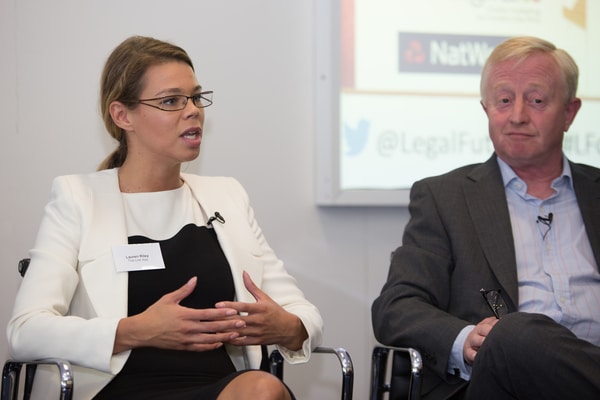
Lauren Riley and Chris Marston
Law firms in England and Wales have imported the practice used by some American firms of offering clients the opportunity to reduce bills if they perceive poor service, it has emerged.
Meanwhile, law firms were advised to ‘mystery shop’ themselves to obtain a client’s-eye view of the service they receive.
Speaking at Tuesday’s Legal Futures NatWest mmadigital From Click to Client conference, Chris Marston, chief executive of LawNet, the network with 66 law firm members, said risk sharing was part of a growing trend.
His members were increasingly “equipping fee-earners with tools and techniques” that helped them devise pricing to reflect “the benefits clients actually receive from legal work”.
“More of our members are doing things like putting a proportion of their fee at risk, so if you’re not delighted at the end, you don’t have to pay this bit of it… I think we are seeing a more enlightened and ‘willing to learn’ kind of attitude towards pricing.”
Also in the panel session on client satisfaction, the conference heard from solicitor and former The Apprentice candidate Lauren Riley, who said that while commercial awareness was now a common part of the training of younger lawyers, the “pushing through” the profession of the younger generation alone would not bring about change in attitudes fast enough.
“That will obviously help,” she said. “But it’s about re-educating the existing management structures within law firms now”.
Ms Riley, who has been using crowdfunding to raise money to fund her legal app, which aims to assist lawyer-client communication, said solicitors’ firms that closed during lunchtime were “the best example of the worst customer service”. She added: “You have to wonder what the receptionist that gets that hour off is doing? She’s probably calling her bank.”
The panel was asked if there was merit in the debate about whether lawyers should say ‘customer’ or ‘client’. Panel members preferred the use of ‘customer’, because it was indicative of modern attitudes towards service.
Jon Whittle, market development director at LexisNexis, said: “I think [the use of ‘client’] indicates a mindset… which is that somehow our relationship with the people we work for is something that we control. So that because they are our client they belong to us, rather than our customer who could go anywhere else.
“Law firms [must] understand that the client actually drives the relationship, not the firm, and calling them clients helps reinforce that view that [lawyers] are in charge. This is potentially quite damaging. It hinders the ability to change your firm’s strategy rather than the actual relationship.”
Ed Fletcher, chief executive of Merseyside serious injury and medical negligence firm Fletchers Solicitors, agreed: “At Fletcher’s our feeling was that really we would like to differentiate the way we start thinking about the injured person as a customer, because we gave more value to that. We wanted to change the way that people previously thought about injured clients. It signified for us a shift in our thinking.”
In a tip that solicitors’ firms could use to improve the service they give to clients, Joanna Swash, the sales and marketing director of Legal Futures associate Moneypenny, which provides outsourced call handling to some 900 UK law firms, advised that ‘mystery shopping’ was essential to identify where improvements were necessary.
“Unless firms do their own mystery shop within their own business, you won’t know what it feels like to be your own customer. You have to go and experience that for yourself. I find it really incredible that so few firms are mystery shopping their own processes,” she said.