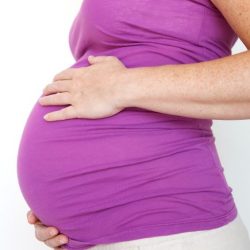
Pregnancy: Notes showed client wanted an elective caesarean
A personal injury solicitor who withheld a piece of evidence he knew would be “catastrophic” to his client’s case has been struck off.
Paul Andrew Smith also feared that the evidence, if disclosed to the other side, would put his client at risk of a finding of fundamental dishonesty.
He admitted acting with a lack of integrity and dishonesty in misleading his client, the opposing solicitors and the court but did not explain his motivation.
The Solicitors Disciplinary Tribunal (SDT) approved a statement of agreed facts and outcome drafted by the Solicitors Regulation Authority that Mr Smith be struck off.
“Although the tribunal was unable to determine his motives, it was clear that this conduct was sustained over a number of months,” it said. “The tribunal found that [Mr Smith’s] actions constituted serious misconduct.”
The SDT heard that Mr Smith, who qualified in 2002, was at the time working at Nottingham Rotheras (now Rothera Bray).
In 2018, the firm started acted for ‘Client A’ in a personal injury claim after she fell in a supermarket. She was in the early stages of a pregnancy at the time and the firm obtained her medical records, including her maternity and antenatal notes.
Mr Smith was not involved in this claim, but a few months later did act for Client A in another claim after she was the passenger in a road traffic accident. She suffered abdominal pain as a result and gave birth via a caesarean section, rather than naturally.
The claim, which included the contention that Client A had intended to have a natural birth – was filed in July 2021. The defendants argued that she had always planned to have a caesarean.
In August 2022, Mr Smith found the medical records that had been obtained for the first claim; the birth plan clearly stated that Client A’s preference was for an elective caesarean.
In a file note, he described this evidence as “catastrophic” to the claim and that thought needed to be given to whether a finding of fundamental dishonesty – which removes the costs protection enjoyed by personal injury claimants – could be avoided.
Soon after, the court ordered that the birth plan and related medical notes be disclosed, together with a witness statement addressing Client A’s intention to have plastic surgery after the birth to deal with any scar produced by the caesarean.
Mr Smith told Client A that he did not have these documents and had her sign a witness statement confirming that the records would show she had intended to have a natural birth and that she had instructed the firm to make more enquiries to trace them.
In his admissions, Mr Smith accepted that this may have led to an increased risk of contempt of court proceedings being brought against her.
In December 2022, he emailed the court, copied to the opposing solicitors, to say that all the documents in Client A’s possession and control had been disclosed.
The following month, in an internal meeting, Mr Smith accepted for the first time that he had the medical records and it reported him to the SRA.
The agreed statement did not detail any mitigation or explanation on his behalf. Mr Smith was struck off and ordered to pay costs of £7,500.