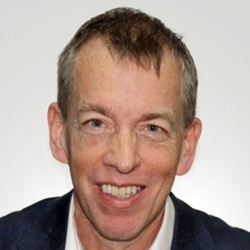
Patten: No taking work away from firms
A private client solicitor has transformed his law firm into a specialist fixed-fee service which aims to unblock stalled probate matters.
Sole practitioner Justin Patten said Human Law used AI to help diagnose the “core” of a dispute, while avoiding becoming “stuck in the narrative and the history”.
Mr Patten said Human Law did not compete with and “was not interested in” taking work away from traditional law firms. Human Law does not provide routine probate administration, will drafting, conveyancing or litigation.
Solicitors who referred work to him were further protected by a “strict non-compete guarantee”.
The law firm, based in Bishop’s Stortford, Hertfordshire, also refers work from executor clients to a number of law firms. It does not pay or receive referral fees.
Mr Patten said he offered a “probate dispute stabilisation model”, which aimed to get the process back on track. He worked “in a very calm way, looking at things objectively and plotting a way forward”.
He said said that, in many cases, the probate process became blocked because someone, often a beneficiary, had registered a caveat, or because there is ‘administration deadlock’, where “co-executor inaction, accounting concerns, or threatened claims” has stalled progress.
He uses AI to upload documents, create chronologies and help him identify strengths and weaknesses.
“Probate friction is overwhelmingly administrative. AI now allows us to ingest and structure multi-year case histories at speed, but every diagnostic conclusion and statutory step remains fully solicitor-led.”
The first step for clients, 80% of whom are executors and 20% solicitors, is a £400 ‘diagnostic audit’, which identifies the core of the dispute.
“We don’t rush in with correspondence. We are looking for what has gone wrong and what is the solution, so we can resolve the issue with minimal fuss.”
Depending on what is needed to progress the matter, there is a range of fixed-fee services to achieve it.
Mr Patten set up Human Law in 2002, after working for general civil law practices in Essex, and he works on his own without other lawyers or staff.
Earlier this year he stopped doing any county court or High Court private client work so he could focus on dispute resolution. Most of his work, but not all of it, takes place before the grant of probate.
He said there was “certainly” a role for mediation, and he expected it to be an increasingly important one. Although he had worked as a mediator, he was now devoting himself entirely to the new service.
In a recent case referred by a solicitor, beneficiaries registered a caveat after their legacies were reduced in the latest version of the will.
Mr Patten said he dealt with the beneficiaries directly and they agreed to withdraw the caveat, which was in their interests because they risked exposure to costs.
“We work with solicitors in a very collaborative way. They give us the file to sort out, and we do that and hand it back.”
The solicitor estimated that eight out of 10 of his clients were based in England and Wales, and the rest living abroad with property here.
Mr Patten is publishing a book for executors and solicitors in October this year, The Out-of-Court Executor.
“The premise is that you can work through family disputes and avoid going to court.”