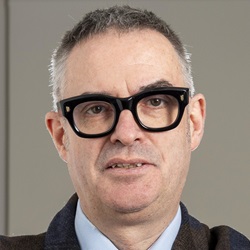
Inkster: Unlevel playing field
The recent entry of two English alternative business structures (ABSs) into Scotland highlights the need for urgent action to allow non-lawyer ownership there, a campaign group has argued.
The ABS Scotland Group, set up last autumn, has also reported fast-growing membership, with 28 law firms having now joined the campaign.
Though ABSs – formally called licensed legal services providers in Scotland – have been allowed since the Legal Services (Scotland) Act 2010, the regulatory regime has not been implemented by the Law Society of Scotland (LSS), a failure that has been criticised over the years.
The Regulation of Legal Services (Scotland) Act 2025, which received royal asset last June, removed the 2010 requirement that ABSs have majority lawyer ownership.
ABSs also no longer have to offer legal services for “fee, gain or reward”, opening the door to charities, and the ban on law centres becoming ABSs has been removed.
However, last September, the LSS announced a two-year delay in work to introduce ABSs, taking the wait since they were first given the green light to 17 years.
It said it remained committed to ABSs “in the medium term” but had decided to prioritise other work.
This led by the creation of the ABS Scotland Group by three managing partners: Rob Aberdein of Simpson & Marwick, Marie Macdonald of Miller Samuel Hill Brown, and Brian Inkster of Inksters.
Since then, Stowe Family Law, owned by Bahrain-headquartered global alternative investment manager Investcorp, has unveiled a partnership with Kee Solicitors, a family practice with offices in Glasgow and Aberdeen.
This cannot be framed as an investment because of the ABS ban. Stowe executive chairman Ken Fowlie told Legal Futures in January that “we’ve had to use different mechanisms” to do the deal.
He was “disappointed that the intention of the government and Scottish parliament [to allow for alternative business structures] is being delayed by how it’s being implemented”.
Stowe is a member of the ABS Scotland Group.
Last month, midlands firm Higgs, which was bought by August Equity last summer, bought Scottish business Vialex, together with its specialist employment law arm, Navigator Employment Law. Vialex is not a regulated law firm.
Many other English and Welsh firms operate in Scotland, including some who have found ways around the ABS ban. In 2023, national giant Irwin Mitchell announced a “strategic investment” in five-office Scottish firm Wright Johnston & Mackenzie.
Mr Inkster said: “We have recently seen English law firms, backed by private equity (PE), buying up Scottish firms. A number have also entered the Scottish market by setting up a Scottish entity.
“They appear to be doing so in a manner that satisfies the Law Society of Scotland’s ownership requirements. However, our own regulator is thus creating an unlevel playing field, one where English law firms, backed by PE, can enter and compete in Scotland but our own homegrown law firms cannot easily access the same PE.”
At the group’s launch, Mr Aberdein said the number of firms joining the group showed that the LSS’s suggestion there was no interest in ABSs was “simply untrue”. He added: “The profession is ready, the market is ready. The only thing missing is Law Society regulation, support and acceptance.”
The ABS group argues that allowing non-lawyers to hold equity in law firms offers flexibility and modernisation at a time when LSS research showed that only 29% of younger solicitors aspired to partnership, with nearly half saying they had no interest at all.
LSS chief executive Ben Kemp told Legal Futures: “Investment in Scottish legal businesses is welcome and a vote of confidence in our legal sector. A record number of Scottish solicitors is testament to this success and the profession continues to grow strongly.
“In relation to recent and indeed historical investment in Scotland by English law firms, no firms operating in Scotland are currently alternative business structures and these firms must comply with all applicable Law Society of Scotland rules.”
Among the non-law firm members of the ABS Scotland Group is Chris Kenny, who as the first chief executive of the Legal Services Board oversaw the launch of ABSs in England and Wales. Since 2015, he has been chief executive of the Medical and Dental Defence Union of Scotland.