


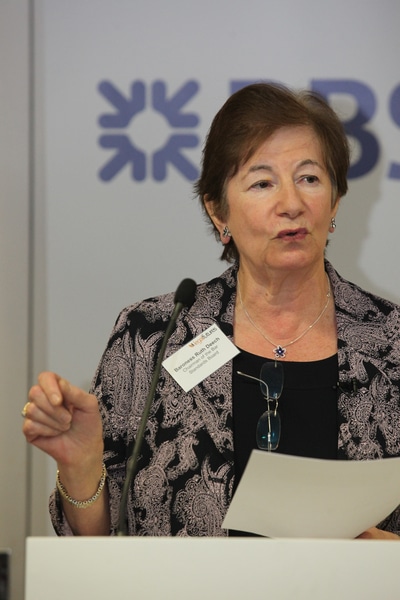
Deech: appoint the best person for the job
Discontent is building among the frontline regulators over a Legal Services Board (LSB) proposal that they should change their internal governance rules to require the chairs of regulatory boards to be lay and not legal professionals.
The Bar Standards Board (BSB) looks set to add its disapproval of the LSB proposal to that voiced by Solicitors Regulation Authority (SRA) chairman Charles Plant earlier this month in comments made to Legal Futures. He said prescriptive rules on the professional background of the SRA chair “seems unnecessary”.
An LSB consultation on the issue is due to end on 19 November. It argued that having lay majorities alone was insufficient for regulators to achieve the required level of independence from the representative bodies or the profession. “It seems probable that better balanced boards would emerge if more of the chairs had leadership experience in a risk-based regulatory context rather than professional experience of self regulation as a member of the profession.”
It admitted the proposal was “ultimately a matter of judgement”, based on four year of oversight, “rather than on empirical evidence”.
While neither the BSB nor the SRA have drafted their responses, at last week’s BSB board meeting lay and barrister members lined up to criticise the proposal. The chair, Ruth Deech, whose term of office finishes, like Mr Plant’s, at the end of 2014, said Mr Plant had told her the SRA “would come back strongly” in its response.
Baroness Deech, a non-practising barrister, said: “I think it’s very hard to dissent from the principle that you should appoint the best person for the job.” She pointed out that, with the LSB’s encouragement, the BSB had changed its constitution to remove a rule requiring that if the chair was lay, the vice-chair should be a barrister and vice versa.
Lay BSB member Tim Robinson, a chartered accountant, said: “For me it would be about having the right leadership characteristics rather than a particular background… it seems very strange to try and prescribe that only a lay person could chair the board.”
Former senior Cabinet Office civil servant and lay member Rolande Anderson complained that the consultation was “remarkably short on evidence”.
Andrew Sanders, a criminal law professor and lay member, said the LSB was “ascribing all the things they don’t like to the fact that there are not lay chairs” and criticised the board for its “faulty reasoning”.
Barrister member Simon Lofthouse QC said he had not seen any evidence to support the LSB proposal and had “difficulty in understanding the logic of limiting the pool of potential candidates”.
The only dissent came from lay member Dr Malcolm Cohen, who observed that the BSB had previously backed down after a “huge row” with the LSB over lay majorities. “I take the view that we might have more important things to get into an argument about than this,” he said, adding that the consultation “as it stands is ridiculous, because it is based on nothing”.
An SRA spokesman said the authority had not finalised its response yet and declined to comment further.











