Le: SQE delivery has improved
There should be more effort to help candidates and others understand why multiple-choice questions are used in the Solicitors Qualifying Exam (SQE), its independent reviewer has suggested.
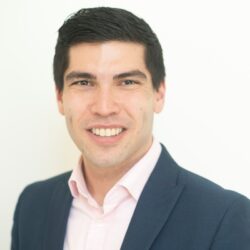
Dr Ricardo Lé’s comment came as part of the series of annual reports on the SQE published yesterday, which found that candidates’ overall satisfaction levels for SQE1 in 2025 was 50-55%, depending on the sitting, slightly lower than in 2024.
The Solicitors Regulation Authority (SRA) said this figure was “not reflective of candidate satisfaction levels in respect of particular aspects of the SQE” – such as administration on the day of the assessment – for which the scores were “generally much higher”.
It said: “The overall score might reflect candidates’ wider feelings about the experience of preparing for and taking a challenging high stakes assessment rather than how it was delivered.”
The independent review’s role is to provide external assurance that the SQE assessments and outcomes are “fair, defensible and will command public confidence”.
Dr Lé wrote in his annual report that it met this challenge. “Overall, the 2025 delivery of the SQE was good and demonstrated improvement based on past annual reports…
“There were some small issues as expected with an assessment of this scale and complexity, but no significant issues that warrant a specific mention in this report.”
He praised SQE provider Kaplan for “comprehensive” quality assurance procedures and taking “every opportunity to make continual enhancements on processes”.
But he said there was scope to increase “the assessment literacy of various stakeholders, particularly candidates, as feedback sometimes highlights a lack of understanding”.
Dr Lé noted criticism of the format of SQE1 and lack of a clear link to professional practice.
“So this year there was information added to the SQE website outlining why single best answer (SBA) multiple choice questions (MCQ) are used and why they are fair.
“It is recognised that solicitors are unlikely to be presented with a list of five options whenever a decision needs to be made. However, this format is appropriate as a measure of functioning legal knowledge as SBA MCQs test application of knowledge in a wide range of areas.
“Similarly, for SQE2, the website contains clear objectives of each station, providing rationale for why the design is as it is.
“I would encourage the continued emphasis of assessment literacy to stakeholders, particularly candidates, as this understanding of objectives and rationale for assessment design can help with preparation.
The SRA’s own quality assurance report said that candidates’ overall satisfaction levels for SQE2, ranged between 46% and 57%, comparable to the previous year, but again scores for specific aspects were much higher.
SRA research published last December found that confidence in the SQE among employers has risen over the past three years but was still not particularly strong – and declined significantly among candidates.
Yesterday’s report said candidate feedback for those with reasonable adjustments had improved but was still below the overall cohort satisfaction levels, “indicating that the journey for these candidates requires improvement”.
Demand for more help with preparation for SQE1 saw Kaplan make 50 new sample questions available, taking to total to 220.
Kaplan’s own annual SQE report recorded pass rates for the two SQE1 sittings of 56% and 41%, while the overall pass rate for SQE2 rose from 76% to 81%, “perhaps reflecting the lower proportion of candidates in this period who were sitting SQE2 without having sat SQE1 under the transitional arrangements – as a group these candidates typically perform less well”.
Solicitor apprentices, who formed a higher proportion of SQE candidates than in 2024 (9% v 5%), continued to perform better than average.
The SRA also confirmed a 3.8% fee increase for the SQE from September 2026 to reflect inflation and “a small annual additional uplift towards the costs of translating the assessments into Welsh”. The SQE1 will cost £2,006 and SQE2 £3,086.
SRA chief executive Sarah Rapson said: “These reports should reassure employers and candidates that the SQE is a robust and rigorous assessment. Setting a high bar at the point of qualification is key to our mission to drive public trust in legal services.
“The independent reviewer, Ricardo Lé, notes the steps that have been taken to improve the experience of candidates. The impact of these measures is demonstrated by improvements in candidate feedback, shown in the quality assurance report.
“Yet there is more to do. While it is often the case that new assessments take time to gain acceptance, confidence in the SQE is not as high as we would like it to be.
“We are engaging more closely with the profession and candidates, and carrying out extensive evaluation. We are committed to making further changes to improve the SQE and to continue to build confidence in it.”
Research earlier this month published by the National Junior Lawyers Division found that 80% of current and former SQE candidates did not consider the exam fit for purpose or good value for money, although SRA figures in January showed that it was delivering a diverse cohort of students.