The Court of Appeal has rejected a convicted man’s application for third-party disclosure from the Bar Standards Board (BSB) over claims that his prosecutor was drunk.
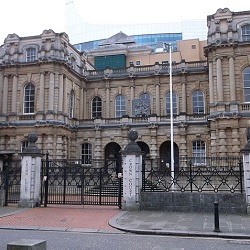
Reading Crown Court: Counsel collapsed
Lord Justice Holgate said [1] even if this had been the case – and it was not – it did not help Martyn Horne’s appeal.
Mr Horne was convicted at Reading Crown Court of five counts of offences against his ex-partner, four on guilty pleas.
He had pleaded not guilty to count 5, an offence of burglary with an intention to inflict grievous bodily harm, but was convicted in November 2024.
He was sentenced to six years’ imprisonment, five years of which related to count 5.
Trial counsel Martyn Hynes advised Mr Horne that there were no grounds for appeal. “In particular, he advised that there was no evidence of prosecutorial misconduct or any circumstances preventing the applicant from having a fair trial.”
Mr Horne sought a second opinion from John Cooper KC, which led to the appeal on a single ground, namely that the prosecution had raised a legitimate expectation that, if he pleaded guilty to two of the counts, they would not prosecute count 5.
This expectation was said to have arisen on 8 April 2024 – the day before he pleaded guilty to two of the counts – during discussions between Mr Hynes and the counsel who appeared for the prosecution until that date.
The case turned entirely upon attendance notes and emails prepared by Mr Horne’s solicitor and counsel some months later, which included suggestions that the prosecution counsel was under investigation for being drunk on 8 April.
Mr Cooper contended that counsel’s condition during the discussions on dropping count 5 was substantially relevant as to whether the legitimate expectation was created and that counsel’s conduct was such that the applicant was not treated fairly and justly.
In response to the case put by Mr Cooper, Mr Hynes said he had in fact given emergency first aid to prosecuting counsel at court, including preparing the use of a defibrillator.
In an effort to clear up what had happened, Mr Horne’s solicitors asked the BSB to confirm the status of an investigation it was thought to be carrying out into the prosecuting counsel’s conduct that day. The BSB replied that its regulations did not allow it to do so.
Mr Horne sought an order for third-party disclosure. Both the regulator and the Crown Prosecution Service argued that such disclosure was inappropriate.
Holgate LJ, giving the court’s unanimous decision, said Mr Hynes’ attendance note recorded that in the afternoon of 8 April, “prosecuting counsel cried out in pain in court, collapsing onto the bench. He appeared to have suffered a heart attack or stroke. He suffered a head injury during a fall and turned blue through restricted airways. Mr Hynes and a police officer administered CPR. An ambulance then took counsel to hospital”.
The judge added: “It is noteworthy that this attendance note contains no suggestion that the prosecutor was intoxicated or that the Crown offered or promised to drop counts 4 and 5 simply in return for the applicant pleading guilty to counts 2 and 3.”
The following day, Mr Horne signed an endorsement expressing his willingness to plead guilty to counts 2 and 3.
“There was no suggestion, in either the endorsement at 12.10 pm or in the basis of plea, that the prosecution should drop count 5 if the applicant pleaded guilty to counts 2 and 3, let alone any suggestion that the prosecution had agreed to this,” said Holgate LJ.
The attendance note and emails from August 2024 “are no more than assertions that a legitimate expectation had been created by prosecuting counsel before his unfortunate illness on 8 April 2024”, the judge went on.
“They do not overcome the fundamental flaws in those assertions as revealed by the contemporaneous evidence.”
In any event, Holgate LJ added, the questions about counsel’s condition on 8 April could not advance the ground of appeal.
“Even if it were to be assumed for the sake of argument in this application that counsel had been intoxicated, that could not overcome the contemporaneous evidence that is wholly inconsistent with the claimed legitimate expectation and with which this renewed application for leave fails to deal. In the circumstances the information sought would not be material.”
As it was, the allegation of intoxication was not supported. Consistent with Mr Hynes’ explanation of what had happened, “the transcript confirmed that prosecuting counsel would not be returning to work quickly. He had been told to refrain from work”.
The court refused the application for an extension of time within which to apply for leave to appeal and refused the application for third-party disclosure.