

Deech: hunt for replacement underway
The timetable for advocates to register for the Quality Assurance Scheme for Advocates (QASA) has been thrown into chaos as a result of the continuing judicial review (JR) of its legality.
The first deadline for registration was 30 May, but the Joint Advocacy Group (JAG) overseeing the scheme announced yesterday that this will be reviewed in light of the date set for a renewed application for permission to appeal the dismissal of the JR.
In January, the challenge to the Legal Services Board’s (LSB) approval of QASA was rejected by the High Court, which also refused permission to appeal.
The four barrister claimants applied directly to the appeal court, but late last month Lord Justice Laws refused permission on the papers. However, the claimants have applied for an oral hearing of the application, which has now been listed for 9 May.
In a statement released yesterday, the JAG said: “In the light of this information, the members of the Joint Advocacy Group have reviewed the registration timetable. The Bar Standards Board (BSB), Solicitors Regulation Authority (SRA) and ILEX Professional Standards (IPS) remain committed to ensuring that all advocates who wish to undertake criminal advocacy are QASA registered by 31 December 2014. However, each regulator has decided to adopt a slightly different approach to the phasing of registration.”
The BSB has suspended the phasing of QASA registration pending the outcome of the hearing, after which the timetable will be reviewed. All barristers who wish to undertake criminal advocacy remain required to register by 31 December 2014.
The SRA will review the current registration timetable for solicitors once the court has made a decision on the renewal application.
The closing date for chartered legal executive advocates to register with IPS under the QASA scheme remains 30 May. However, IPS will review the date after 9 May and will let advocates know whether this will change then.
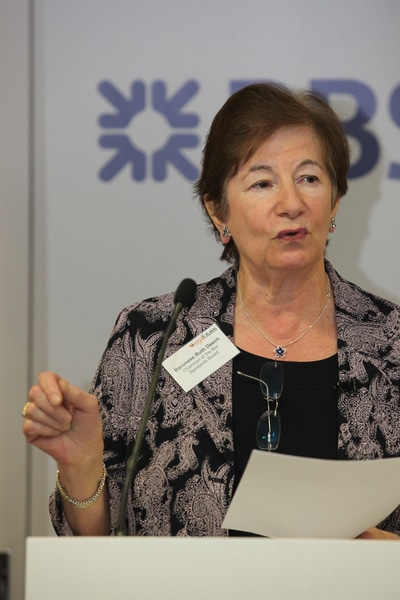
Meanwhile, the BSB has begun the process to replace Baroness Ruth Deech as its chair when her term ends on 31 December 2014. Under new LSB rules, the new chair has to be a lay person.
Baroness Deech’s status has been a point of contention between the two organisations from the start. Though she was called to the Bar, she never practised; the BSB considered her a lay chair, but the LSB did not. The BSB chair receives £89,352 for an assumed 112 days per annum.
The BSB is also recruiting two barrister and two lay members.
For information on the chair’s role, click here, and on the board member positions here.