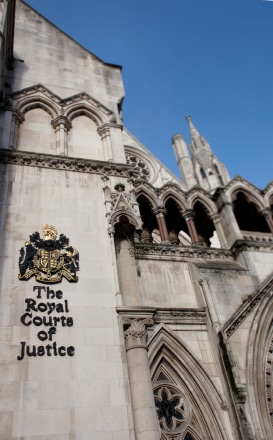
Court of Appeal: QASA opposition rolls on
The legal challenge to the Quality Assurance Scheme for Advocates (QASA) is not yet dead after it emerged that the claimants have gone to the Court of Appeal to seek permission to appeal.
Earlier this month the permission to appeal its dismissal of the judicial review of the Legal Services Board’s (LSB) decision to approve QASA, saying there was no reasonable prospect of a successful challenge.
The president of the Queen’s Bench Division, Sir Brian Leveson, sat on the judicial review, along with Mr Justice Bean and Mr Justice Cranston. They said that though “professional concern” about the impact of QASA may have justified commencing proceedings, it “does not justify them being taken further”.
The decision to seek the appeal court’s permission means that introduction of QASA is stayed until the proceedings have concluded, however.
An LSB spokesman said the parties are currently waiting to hear from the court about the timing of the application.
Meanwhile, newly published LSB papers show that it paid Herbert Smith Freehills (HSF) £30,000 for its work on the judicial review before changing lawyers because of concerns over cost.
When using HSF, the LSB suggested that its costs for the entire action might reach £400,000 – a figure Mr Justice Bean said was “at first sight staggering” during one pre-trial hearing – before it changed to Field Fisher Waterhouse and halved the estimate.
At the time, the LSB told Legal Futures that the move was about managing its exposure to costs once the court had granted permission to bring the judicial review.
An update from chief executive Chris Kenny for the November meeting of the LSB said HSF, as with all members of the LSB’s legal panel, was appointed after an open competition.
“The agreed charging rates were discounted from commercial rates and set at the level approved by the Government Procurement Service. Having undertaken the work up to permission stage, HSF then provided the LSB with an additional 66% discount. We have therefore incurred costs with HSF in the region of £30,000.
“Field Fisher Waterhouse has estimated its costs to conclusion of the matter in the sum of £90,000, with combined counsel’s fees expected to increase the LSB’s total bill to around £200,000 (exclusive of VAT).”
The High Court set a £150,000 cap on the recoverable costs, and the Criminal Bar Association – which backed the four individual claimants in the judicial review – is now raising the money to pay it.
In refusing permission to appeal, the High Court also refused an application to extend the protective costs order to cover the costs incurred in any appeal to the Court of Appeal, saying it was for that court to decide.