


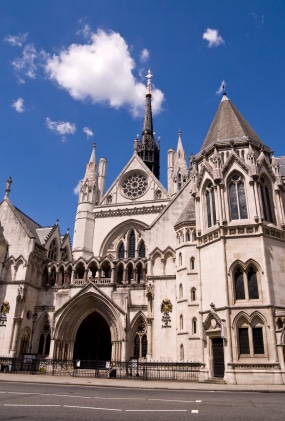
Court of Appeal: decision awaited
The Criminal Bar Association (CBA) and circuits could face a £65,000 bill – nearly twice what they had hoped for – if their Court of Appeal bid to derail the Quality Assurance Scheme for Advocates (QASA) fails, it has emerged.
That is on top of the £150,000 they were ordered to pay in the High Court, meaning a possible total of £215,000
As the profession awaits the appeal court’s ruling on the High Court decision to uphold the Legal Services Board’s (LSB) approval of the scheme, details of the protective costs order (PCO) have emerged.
In the High Court, there was a PCO for £150,000 – which was 10 times the amount the barrister claimants, who are being funded by the CBA and circuits, had argued for – and the court .
According to LSB papers, the claimants sought a cap of £34,000 for the Court of Appeal proceedings – “representing the amount they expected they could raise through members of the CBA and the circuits”.
Instead, the court accepted Mr Justice Ouseley’s rationale from the initial PCO relating to the High Court proceedings but worked on the basis of the CBA being able to raise £50 per head from a proportion of its members, as opposed to the £100 Ouseley J had used. This led to the starting figure of a £75,000 cap.
The LSB papers said: “The claimants put to the court the limited funds that had so far been promised to the claimants by the circuits/CBA and made the same arguments that were raised in relation to the initial PCO application (i.e. case being brought in the public interest and it was an action on behalf of the whole legal profession).
“The court subsequently ordered a slightly lower cap of £65,000.”
It was agreed that the claimants could apply to the court within two weeks if the funds could not be raised and if, as a result, it appeared that the appeal case would have to be dropped due to lack of funding. According to an LSB spokesman, this did not happen, however. But he added: “The costs of the appeal remain the subject of an application currently before the court.”
The LSB papers indicate that it would have taken a robust approach to such an application. “At first sight, it seems perverse for costs to be passed to the whole of the profession just because those pursuing their own agenda are unwilling to commit the resources necessary to pursue the challenge,” the regulator said.











