 [1]
[1]Worth: Looking to the future
A specialist private client law firm in the Midlands has launched a model to help other practices facing succession issues after announcing a deal with a high-profile probate firm in Plymouth.
Honey Legal, based in Market Drayton, Shropshire, has announced a partnership with Portcullis Legals that lays the foundations for its succession.
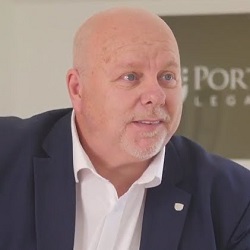
Portcullis was founded 38 years ago by Trevor Worth and made headlines around the world in 2019 after embracing a four-day working week [2].
Portullis is an unregulated firm; Mr Worth is a full member of the Society of Trust and Estate Practitioners
He said he has no plans to retire but that it was time to put succession plans in place.
Portcullis has agreed a long-term partnership with Honey, based on a new model developed by the two firms which combines “local client relationships with national probate capability.”
Portcullis will be the first point of contact for clients in the South-West, before clients are introduced to Honey’s national probate team and client files are handed over.
Mr Worth said: “Most relationships within our sector are informal arrangements without real long-term certainty behind them. We wanted to break that mould by creating something formal, transparent, and genuinely built around client continuity and future protection.
“This partnership is entirely about doing the right thing for our clients and ensuring they remain protected long into the future.”
A Honey Legal spokesperson said the firm had relationships with several referrers, “but what makes this arrangement different is the formal structure around probate support, client continuity, and succession planning, rather than a looser referral model.
“In that sense, it is a strong example of how a long-term partnership can work particularly well when the priority is protecting clients and planning for the future.”
The two firms trialled the new model for a year before announcing their partnership this week.
During the trial, Portcullis and Honey mapped the new client journey leading up to and after the handover – from the first conversation with a client following a death to the final distribution of the estate – to understand how both firms could best support families at each stage.
Mr Worth said: “The trial period gave me enormous confidence because I could see first-hand the quality of care and support clients were receiving through Honey Legal’s probate team. Families were being looked after properly, communication was excellent, and the whole process felt smooth.”
He said both firms believed the model offered “a more structured approach to succession planning.”
The Honey spokesperson described Portcullis “as a standalone and important local brand.”
“It has real recognition and trust in the South-West, so preserving that identity is an important part of protecting client relationships and continuity. The partnership is about combining that local reputation with Honey Legal’s national probate capability, not replacing it.”
Al Gardiner, CEO of Honey Legal, added: “Trevor has spent almost 40 years building an exceptional reputation based on trust, relationships and genuinely caring for people. What we have created together is a proper long-term structure that gives clients certainty for the future.
“Trevor is not retiring any time soon, and we are delighted he will continue doing what he does best for many years ahead.
“But when the time eventually comes to hand over the mantle, Honey Legal will already be there to continue supporting those families with the same care and professionalism.”
Having seen the success of the partnership with Portcullis, Honey is now actively looking to roll out its new model with other firms, with plans to more than double its probate team over the next 12 months.
“We are open to more partnerships like this where there is a genuine strategic fit and a shared commitment to client continuity, succession planning, and long-term care,” the spokesperson said.
“For us, these arrangements only make sense where they clearly benefit clients and support a responsible long-term future for both firms.”