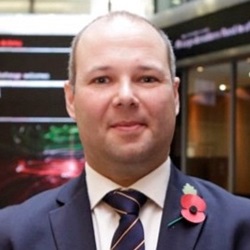
Simpson: Probate Service does not understand the situation
Probate delays have left some clients feeling suicidal because they are running out of money, the head of a leading probate provider has told MPs on the justice select committee.
Stuart Simpson said staff at financial services firm Equiniti were “trained to deal with these things”, but it remained an “ongoing concern”.
Mr Simpson, head of Equiniti Benefactor – which provides end-of-life services – said the firm made 500-600 probate applications every year. Delays at the Probate Service meant the average time to process probate applications had risen to 24 weeks, and in some cases 30 weeks.
“We have seen people where the main income earner has passed away who cannot receive the funds they need to live on because they are locked up in probate.
“Fortunately we get very few of these, but we have had people contacting us, saying: ‘I am suicidal’.”
Asked by committee chair Sir Bob Neill whether he contacted the Probate Service and they understood the situation, Mr Simpson said the answer was “no” if you used the contact centre and “very much no” if you used web chat, with its “stock answers”.
He went on: “We have found an individual at one of the probate courts who is really helpful. We have selectively used that individual in a small number of cases saying ‘we need to escalate because of certain circumstances’.”
Mr Simpson said the Probate Service began clearing its backlog in December last year, a quiet time of year, processing 6,000 more applications than it received. In January and February this year, it was able to process 2,000 more than received.
But as the pace of applications grew in March and April, Mr Simpson said he would question whether we would see “the backlog grow again”.
His other concern was that “at no point” had the Probate Service communicated what the size of its backlog actually was.
“I estimate that last year they received 40,000 more applications than they processed.”
Giving evidence alongside him as part of the committee’s inquiry into probate delays, Jo Summers, partner at law firm Jurit and a spokeswoman for the Society of Trust and Estate Practitioners (STEP), said inconsistency was in many ways the biggest problem.
“If a client asks how long it is going to take, I don’t know what to say to them. It could come back in four weeks, or it could come back in four months or it could disappear for nine months.”
Ms Summers said the delays had caused “real financial problems” for clients, with people having to borrow money to pay inheritance tax.
She said the delays had spawned unregulated providers, who were “popping up offering products that avoid the probate delays because they don’t require probate”, often involving the setting up of trusts and “completely ignoring” the tax liabilities that involved.
“They’re not regulated to be a trust or tax adviser. It’s a Wild West.”
Ms Summers and Mr Simpson agreed that minimum service standards should be imposed on the Probate Service, an idea put forward by the Law Society, and that outsourcing should be used to bring in experienced probate staff, as proposed by STEP.