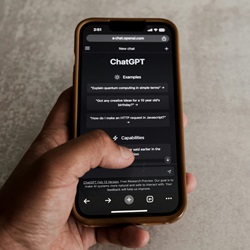
ChatGPT: Consumers checking their lawyers’ advice
People with legal problems are seeking emotional support from AI chatbots, as well as using them to check the services they receive from their lawyers, according to research.
Legal charity JUSTICE said that a sixth of people reporting a legal dispute in the last two years used a chatbot like ChatGPT, but only 6% used a chatbot and nothing else, meaning they were “supplementing other sources of help” rather than replacing them.
“Participants described feeling frightened about court proceedings, worried about losing their job, and overwhelmed by the uncertainty of ongoing disputes.
“Some asked explicitly whether there was ‘emotional support’ available, while others told chatbots they felt ‘lost and powerless’ and sought reassurance about what might happen next.”
Researchers said there was a “growing concern about the impact of training AI chatbots to be friendly and validating, with evidence suggesting that it makes them more likely to make mistakes and reinforce false beliefs.
“This raises the question of whether, by seeking emotional support as well as legal help from these chatbots at the same time, users may unwittingly set themselves up to receive less reliable advice.”
Meanwhile, other people with legal problems were using chatbots “to query and check the service they were receiving from their lawyers”.
Chatbots were asked to provide “a second opinion on whether a solicitor’s conduct was reasonable or might ground a complaint”.
One person found it “very unprofessional” that her conveyancing solicitor had verified a building’s height using Google Maps, while another asked if it was “appropriate” for a conveyancer to request their mortgage funds “without my consent”.
JUSTICE and the Administrative Fairness Lab based the report, What AI Chatbots Can Teach Us About Unmet Legal Needs [1], on a survey of 1,428 people who reported being involved in a legal dispute in the last two years.
Young people aged 18 to 24 were much more likely to have used a chatbot – 26% compared to 10% of those aged 55 to 64, while consumer disputes, housing and landlord-tenant issues and employment disputes were particularly common topics.
Some of those who had used a chatbot shared anonymised examples of their conversations. These suggested that people were “turning to AI chatbots for problems that are common, stressful, and often difficult to navigate without advice, but that largely fall outside the scope of legal aid”.
The most widespread use of chatbots was to answer “direct questions about legal rights and options”.
Using chatbots as “drafting assistants” was also common, improving text that was already written or providing templates. Others wanted chatbots to “write correspondence from scratch, including complaint letters, refund requests and formal warnings”.
Chatbots users were “younger, more likely to be male, and more likely to be employed than those who did not use chatbots”.
Researchers commented: “This suggests that those with unmet legal need who are women, older or unemployed are not benefiting equally from this technology, and indeed the justice gap for them may be widening, not closing, with the advent of these new technologies.”
Ellen Lefley, deputy legal director at JUSTICE, commented: “The question is not whether AI becomes part of people’s legal journeys – it already is.
“There is a risk that the digital gap reshapes and deepens the justice gap. AI is clearly meeting some unmet legal need, but not helping the most excluded or marginalised. For them, AI is not the solution; but in fact could cause even more confusion and inequality.”