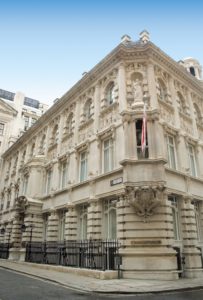
ICAEW: £576,000 in income from regulating probate work
The Legal Services Board (LSB) has persuaded all the legal regulators to produce straightforward annual statements on their costs so that practitioners can clearly see how their money is being spent, it has emerged.
As a result, the LSB agreed at last month’s board meeting to shut down its cost of regulation project and publish its own costs statement.
Research conducted as part of the project showed that many lawyers, particularly solicitors and barristers, complain about their practising certificate fees, but there are high levels of ignorance about what they are paying for.
Two regulators, the Institute of Chartered Accountants in England and Wales (ICAEW) and Intellectual Property Regulation Board have already published annual costs statements based on previous financial years, as required by the LSB’s new transparency principles.
Four more – the Bar Standards Board, CILEx Regulation, the Costs Lawyer Standards Board and Master of Faculties – have signed up to the principles and agreed to publish statements.
The Solicitors Regulation Authority and Council of Licensed Conveyancers have committed to publishing a statement, but not explicitly agreed to the LSB’s principles.
The move follows a letter sent by LSB chief executive Neil Buckley to the heads of the legal regulators in February, asking them to confirm that they would sign up to the principles.
According to papers from last month’s meeting of the full LSB board, there was a “degree of ambiguity in some of the responses, which may reflect the difficult nature of our discussions with some of the regulators on this topic”. However, the LSB said it had “interpreted the responses” as agreeing to publish statements.
Despite this push for greater transparency, the LSB redacted the two following pages of board paper which might have given more detail on the “ambiguity”.
However, the oversight regulator said the regulators received the proposals “much more positively” than in September last year.
“Given the improvements seen this year and the commitment given by the regulators, we think it is reasonable to continue with a voluntary approach for the forthcoming year and put in place monitoring activity.
“This will give the regulators the opportunity to demonstrate that commitment in practice.”
According to the minutes of the board meeting, the LSB said it would now approach the Office for Legal Complaints and Solicitors Disciplinary Tribunal, and ask them to publish their costs statements.
“The board agreed that as all the frontline regulators have voluntarily agreed to publish a cost statement the LSB would close the project and set up monitoring for each of the regulators’ cost statements.”
The LSB said an analysis of the costs statements would be brought to the board next year.
According to the statement published by ICAEW, its regulation of probate services is self-financing and has met target funding for its compensation scheme.
The ICAEW regulates 325 members of staff at 161 licensed alternative business structures, and 187 staff at 80 authorised probate firms. The former are firms of accountants where only some staff are able to handle probate work; the latter where all of them are.
Its income from the scheme is £576,000, and more than half (52%) of its expenditure of £532,000 is spent on the compensation scheme.
According to the LSB’s draft annual statement, 83% of its funding comes from the Law Society, 9% from the Bar Council, 5% from CILEx and only 3% from the all the other regulators combined.
Mr Buckley’s salary as chief executive of the LSB was, at April last year, the equivalent of £140,000 if he worked full-time, over 2.5 times the median salary of his workforce, which was just over £55,000.