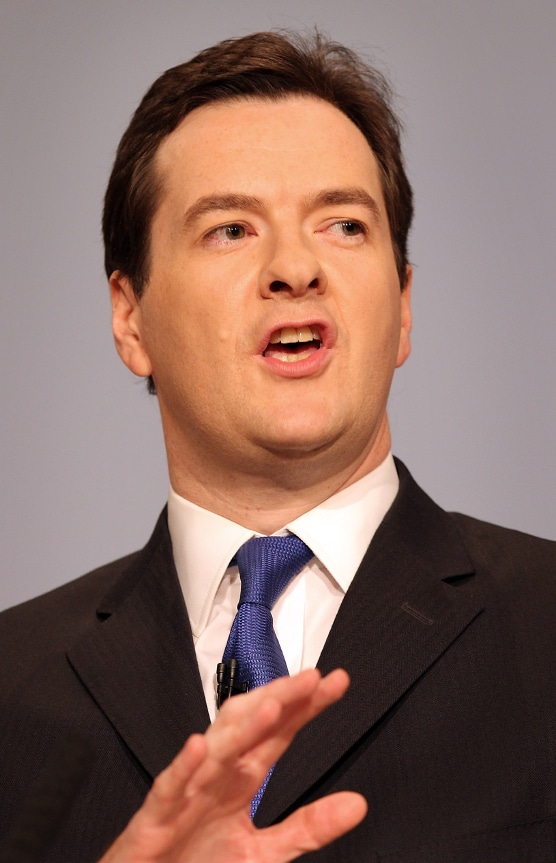
Osborne: legislation will take effect next month
The Chancellor George Osborne yesterday confirmed that there would be no delay in introducing the changes to the way LLPs are taxed, which has left many firms seeking funding for capital contributions.
Lawyers, other professionals and even a House of Lords committee have criticised the haste with which the changes to the treatment of salaried partners have been introduced.
But the Budget document issued after the Chancellor’s address to the House of Commons said: “The government will introduce legislation that will take effect from April 2014 to counter the disguising of employment relationships in limited liability partnerships and prevent the tax-motivated allocation of business profits to corporate partners which are generally taxed at lower rates than individuals.”
However, the Treasury has strongly welcomed the work of the Office of Tax Simplification (OTS) on the rules surrounding partnerships, and the Budget documents said it will implement the OTS’s recommendations to simplify the taxation of partnerships.
In January, an interim report from the OTS said that partnerships are “very much the poor relation” in the way they are handled by HM Revenue & Customs and indeed regarded by government”. Steering away from the salaried partner issue, it suggested a range of short-term fixes HMRC could introduce, as well as medium and longer term issues that needed to be addressed.
In a letter to the OTS yesterday, David Gauke MP, Exchequer Secretary to the Treasury, praised its work and said that in response to the report, HMRC will next month publish a draft consolidated Partnership Tax Manual for external comment in April 2014. “This will make it easier for businesses to access guidance for partnerships in one place,” he said.
“HMRC is also working with the Department of Business, Innovation and Skills to re-publish the model partnership agreement, and believes that this can be integrated within the consolidated guidance.”
Accepting most, but not all, of the short-term fixes – ruling out a couple because of their cost – Mr Gauke added: “I look forward to considering any further work you do on the areas you identified as priorities for longer-term consideration.”
Separately, the Budget documents revealed that the Ministry of Justice’s £7.4bn budget is set to fall to £6.7bn in 2014/15 and £6.2bn the following year.
The first tranche of legal aid cuts for criminal defence solicitors take effect from today, slicing 8.75% from their fees, and at a meeting yesterday in Manchester, representatives of 717 of the 1,599 criminal contract holders said they would start working on the new rates under protest.
Decisions on whether to refuse to work at the new rates, and other militant action, were deferred to allow for more chance to consult with other firms. Those present did vote for “ultra compliance” with the Criminal Procedure Rules, a work to rule, and to withdraw their goodwill.
They also agreed to hold two further ‘training days’ on 31 March and 1 April, meaning the solicitors will not attend police stations and court duty schemes.
There was support for a judicial review of the consultation process and the guarantee that the Public Defender Service will receive a contract. The Law Society is to be asked to finance this, although firms pledged to contribute if needed.