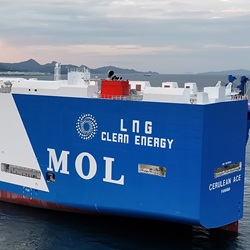
MOL: Defendant settles
Businesses are to benefit from an opt-out class action for the first time after the last two defendants in the car delivery charges case settled for £54m.
It brings the total compensation recovered on behalf of consumers and businesses to £93m.
The latest settlements with MOL and NYK follow a £1.5m settlement with smallest defendant, CSAV, in December 2023 – the first settlement to be approved under the regime – and further settlements of £12.75m with ‘K’ Line and £24.5m with WWL/EUKOR in January this year.
That money has not yet been distributed as it was pending resolution of the rest of the claim.
The case – which was originally valued at around £150m – centred on the fees charged for shipping 17m new cars and vans to the UK made by major European car markers; they themselves were not involved.
The vehicles were sold or leased by UK businesses and consumers between October 2006 and September 2015.
The Competition Appeal Tribunal (CAT) is due to approve the final two settlements next month in the wake of a nine-week trial which started in January. Judgment was reserved.
The proposal is that £20m of the money would be guaranteed as damages or, if not all used up, charity, while a further £12m would be available in the event that the guaranteed sum is not enough.
Another £20m will go towards costs, fees and disbursements, with the remaining £1.5m a contribution to the costs of distribution.
The class representative is Mark McLaren, a former parliamentary and legal affairs manager at the Consumers’ Association.
He said: “Since I launched this case five years ago, I was confident that this claim would result in significant damages being awarded to UK consumers and businesses.
“This outcome also shows how the UK’s opt-out regime is working exactly as intended, giving both consumers and businesses an effective and fair route to recover monies owed as a result of cartel behaviour that they could never pursue on their own.”
Cian Mansfield, managing partner of his solicitors, Scott+Scott UK, commented: “This settlement marks a significant milestone for UK consumers and businesses that paid higher shipping fees for new purchased or leased vehicles as a result of the cartel as it concludes the litigation and guarantees them significant compensation.
“This case is groundbreaking as it is the first time damages will be distributed to UK businesses under the opt-out regime.”
The case was funded by Woodsford. Chief investment officer Charlie Morris said: “At a time when the Department for Business and Trade is carrying out a review of the collective action regime, this action is the paradigm example of why the regime is so important.
“It has allowed thousands of UK consumers and businesses to access justice and receive meaningful compensation when they might not otherwise have been able to do so.
“Particularly given that a significant proportion of these settlements is guaranteed to be paid to consumers, businesses and/or charity, this action can and should be recognised as a real success story.”
Mr McLaren was involved in advising Parliament on the Consumer Rights Act 2015, which introduced the collective action regime. He is a former lay member of the Legal Services Consumer Panel.