Briggs LJ: unbundling and direct access work required
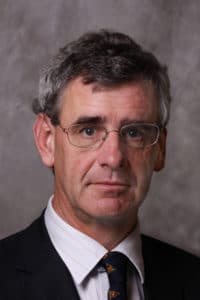
The new Online Court will not ban lawyers and there will be “a very limited element of fixed costs” so litigants can get initial legal advice – but not the full “over-expensive” service, Lord Justice Briggs said yesterday.
Briggs LJ said the top limit for claims at the Online Court, the most radical feature of his interim report on the structure of the civil courts earlier this year, “may have to start at £10,000” rather than the proposed £25,000.
The judge said the new court would be “less adversarial and more investigative”, and the judges would have to be, to a large extent, their own lawyers.
However, he went on: “I do propose that there should be a very limited element of fixed costs on top of the recovery only of disbursements to encourage litigants to get early bespoke advice on the merits by a qualified lawyer and possibly limited trial assistance where appropriate, for example in a case where cross-examination is the only way to get at the truth.
“That will mean more unbundling by solicitors and more direct access by barristers. It is not intended, like the Civil Resolution Tribunal in British Columbia, to ban lawyers – save where a judge in a particular case decides otherwise.”
Speaking at a Westminster Legal Policy Forum event, Briggs LJ said the Online Court “will have, as an ambition, £25,000 as a ceiling, but it may have to start at £10,000 in its very first iteration to make sure it works”.
He said the court would have a “permeable membrane” so that cases which were complicated, or for some public interest reason too important, could be handled elsewhere.
The court would not be suitable for personal injury or possession cases and there would be “other specific opt-outs”, he added.
He promised that it would be “accompanied by a revolution in legal education – California and British Columbia are well ahead of us in that respect.”
Briggs LJ said the Online Court “should be backed in my view by a contingency legal aid fund”, which the Law Society and Bar Council were “seriously thinking about”. Lord Justice Jackson called for the creation of such a fund earlier this year.
On the rest of the civil court system, Briggs LJ said his provisional view was that there should be “no unification of the civil courts”, with the High Court still “a badge of quality and specialisation”.
However, he said he would be proposing a “big rise in the thresholds” to determine where claims are issued, to prevent the High Court and London “being swamped” by cases that could be heard elsewhere.
Briggs LJ said, as he did in his interim report, that there should be no case too big or complex to be heard in the regions, with specialist judicial services in the main regional centres and more frequent visits from High Court judges.
“There must be serious attention given to the current crippling shortage of civil circuit judges outside London.”
Answering questions after his speech, Lord Justice Briggs said the Online Court’s budget was included in the £736m set aside by the government for transformation of the courts and the first stage of planning the new court “had already started”.
He said he had not decided if case officers at the Online Court needed to be legally qualified. “The key is to create large enough teams to have specialisation. If it was a charity case, you would need a legally qualified case officer.”
Briggs LJ added that his final report would be delivered to the Master of the Rolls and Lord Chief Justice in July, who would decide when to publish it.
Professor Roger Smith, former director of JUSTICE and now a researcher into the provision of online legal services for people on low incomes, told the forum that although the Online Court would put England and Wales at the “cutting edge” of what was happening in the world, access to justice must be an “underlying principle”,
Professor Smith said online determination of cases must be accompanied by offline help for those who would otherwise be excluded.
He proposed that the Online Court should have “precise, user-orientated goals” and there would be “no excuse” for a drop in the quality of justice.