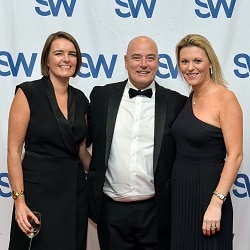
L-R: Karen Bexley, Gordon Lane, Anna Beaumont
The founders of a new consultant-led law firm are aiming to challenge not only the traditional law firm model but also the current fee-share models which have evolved over recent years.
Bexley Beaumont promises to offer the senior lawyers it recruits greater fee-earner and social support.
The firm, which received its alternative business structure (ABS) licence last week, is the brainchild of Karen Bexley, formerly head of employment at North-West firm MLP Law, and Anna Beaumont, a corporate lawyer who is the former chief executive of gunnercooke, a leading name in the flexible/virtual law firm field.
They have appointed Gordon Lane, managing director of Seneca Corporate Finance, as a non-executive director.
Ms Beaumont told Legal Futures that she preferred to call the new firm a hybrid, as it is not virtual: it has a base in Manchester where the senior associate/legal director level staff it will recruit will work with the partners.
This is in contrast to many of the fee-share models, where lawyers who want support from more junior fee-earners have to hire them personally.
She said the vision was to create a “boutique, quality corporate and commercial law firm”, and hoped that in a year’s time around 10-15 partners – actually self-employed consultants – would be working out of Manchester.
The firm would then also look to open hubs in other key centres such as London, Leeds, Birmingham and Sheffield.
“We will bring on employees when we know the partners who are coming on board and what support they need. We’re not scaling to be a large business; we are focusing on quality and ensuring we have a team culture.”
These lawyers will support the partners in building their practices, as well as providing holiday cover. Ms Beaumont said: “We’ll know we’ve got this model right when they can transfer to become fee-share partners. It also allows for succession planning when partners retire.”
Another key element will be building a genuine team culture, in part promoted by an element of profit-sharing between all the partners, and also by transparency on what the firm is spending on central services and what she and Ms Bexley are taking out of the business.
“Culture isn’t one thing – all these different elements are going to help the partners feel part of the firm. We will not have a ‘them and us’ situation.”
She added: “I’m a huge ambassador for the fee-share model and we are looking to build and innovate the already successful model and offer something different and new.
“Karen and I will heavily be involved in business development and will bring clients to the firm for the partners to work with.
“From our perspective, it’s important we work hard to create this team culture and work closely with the partners to ensure they still feel part of our professional family and have the right level of support both personally and professionally”.
Bexley Beaumont will not be looking to hire more junior lawyers, and Ms Beaumont acknowledged the criticism that fee-share firms like this did nothing to train the next generation. But she said she was committed to addressing the issue.