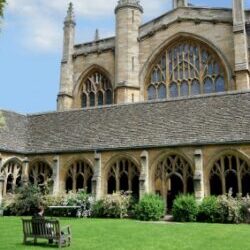
Oxford University: Route to the Bar
A majority of pupil barristers (53%) have backgrounds at Oxford or Cambridge universities, while 42% come from private schools, new research has found.
More than three quarters of pupils have a first-class degree, with the average pupillage award reaching £76,000 for an average working week of 53 hours.
Those pupils who were not at Oxbridge were most likely to have been to Russell Group universities (23%), with the proportion coming from overseas universities (12%) exceeding those from other UK universities (11%).
The most common Russell Group universities attended were Bristol, Durham, the LSE and UCL in London, with Harvard and Yale featuring from overseas.
With 77% of pupils having a first-class degree and 20% an upper second, researchers said it was “incredibly rare” for them to have anything else, such as a 2.2 or a third. More than half of pupils and junior barristers (52%) had a master’s degree.
Researchers said the average pupillage award in the survey was £76,000, with the highest amount paid being £90,000.
Commercial sets paid the highest awards and “pupils who gain tenancy at such sets can quickly outstrip their solicitor peers in the income stakes”.
However, fees earned by those doing publicly funded civil, criminal or family law “have always been low”. The minimum award for pupils is £24,203 in London and £22,019 beyond.
Researchers from legal rankings and insights intelligence company Chambers & Partners gathered 166 responses from pupils at 33 sets for The student’s guide to a career at the Bar, and interviewed pupils, junior barristers and pupillage committee members at 51 sets.
Although 43% of pupils did not go to a fee-paying school, compared to 42% who did, this compares with 93% of people in the UK who are state educated. A significant minority of 10% went to an international school, and 5% both state and private.
The most popular reason for becoming a barrister was the ‘intellectual challenge’, cited by three out of 10, with half as many seeking a ‘rewarding’ or ‘prestigious’ career, hoping to ‘make the world a better place’ or ‘apply my passion for advocacy’.
Only 6% mentioned income as a reason for becoming a barrister, with a mere 1% interested in ‘representing the vulnerable’.
Just over half of pupils did not have a law degree, with the most popular alternatives being history, followed by modern languages and classics.
Over a third of pupils did their Bar course at City Law School, with just under a quarter going either to the Inns of Court College of Advocacy or BPP. The University of Law was the choice of 17%.
A pupil took part in an average of six mini-pupillages before gaining a pupillage. Nine out of 10 pupils said taking silk was their aspiration.
Cait Evans, global talent head of research at Chambers and Partners, said: “Aspiring barristers face huge competition for pupillages with top academics from a prestigious university a prerequisite at most top sets.
“Oxbridge graduates still predominate and despite considerable efforts to promote social mobility at the Bar, a disproportionate number of pupils still went to fee-paying schools. This is perhaps unsurprising when we look at how long the journey to a career at the Bar can be, with considerable financial outlays along the way.
“Those who make it demonstrate huge commitment to the profession and our research shows that in the early days of their careers at least, they see themselves working at the Bar for life, with almost all aspiring to take silk.”