


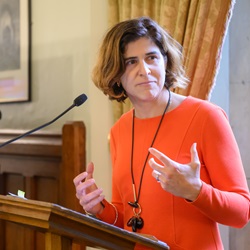
Justice minister Sarah Sackman speaks at the report’s launch
The government has given its strongest indication yet that it plans to modernise wills, particularly introducing electronic wills.
Minister Sarah Sackman said it recognised that enabling electronic wills “could modernise the will-making process” but also wanted to ensure safeguards were in place.
She was responding to a letter last month from the House of Lords’ justice and home affairs committee expressing concern that the Ministry of Justice was not doing anything about the Law Commission’s Modernising wills law report, published 18 months ago.
This made 31 recommendations, including that electronic will should be capable of being formally valid on an equal basis to paper wills.
Other recommendations cover testamentary capacity, the formalities for making a will, undue influence, and the effect of marriage and civil partnership on an existing will.
Ms Sackman offered “reassurance that work is actively progressing”.
She said: “The government has been considering the recommendations carefully, together with the wider implications of reform. The recommendations affect not only the substantive law but also court and probate processes, digital systems, safeguards for vulnerable people, professional practice and public awareness.
“It has therefore been important to consider both the legal framework and the practical arrangements that would be needed to implement any reforms effectively.”
Ms Sackman said the government recognised that enabling electronic wills “could modernise the will-making process, improve accessibility and convenience, and reduce the risks associated with the loss, damage or destruction of paper wills. It could also provide opportunities for more secure storage and retrieval”.
But it was “equally important” that any reform incorporated appropriate safeguards to protect testators, particularly those who may be vulnerable, and to ensure the “authenticity, security and integrity” of electronic wills.
She said that, while the lack of a formal response to the Law Commission report may have created the impression that little work was taking place, “this is certainly not the case and officials have been working closely with the Law Commission to consider the recommendations”.
Ms Sackman said the ministry was working to publish the formal response “as soon as possible”.












Leave a Comment