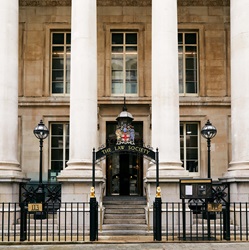
Law Society: Appeal decision pending
The Law Society has yet to decide whether to appeal last week’s Mazur ruling, while the Solicitors Regulation Authority (SRA) is reviewing investigations that followed the High Court ruling.
With the profession still digesting the Court of Appeal’s decision [1] to overturn Mr Justice Sheldon’s judgment, a leading law firm said the SRA should “be prepared to show contrition on this issue”.
The court found against the position put by the Law Society and SRA. A Law Society spokesman said: “We are carefully reviewing the judgment and considering next steps. We would not expect to appeal unless we considered it was in the interests of the profession to do so.”
The SRA has not indicated it is considering an appeal. Asked whether it would now drop any investigations triggered by the original decision, a spokesman said: “We will only take action where it is proportionate to do so and in the public interest. We were clear that we will treat sympathetically self-report incidences of genuine error.
“We only have a small number of cases we were looking into, and we will review them in light of the judgment.”
In a briefing on the ruling [2], Tom Bedford and Fergal Cathie, partners at City firm Clyde & Co, said they suspected the SRA “will – or at least, should – be prepared to show contrition” towards firms that have self-reported.
The lawyers – who both represent solicitors facing regulatory and negligence claims – explained: “We cannot see how it can criticise firms for failing to properly supervise unauthorised individuals in circumstances where it has taken an incorrect approach to this issue on, we think, three separate occasions.
“Mazur has, however, allowed the court an opportunity to remind the profession of its responsibilities. Future transgressions may not be treated with the understanding that, we predict, the SRA will have no choice but to demonstrate now.”
More broadly, they said the case stressed the importance of supervision of unauthorised individuals.
“The court gave the example of a regular supervision meeting, during which a sample of work is reviewed. That might be a novel way of working for some firms, but whether that is the approach that is adopted, or a more specific ‘case by case’ form of supervision, one thing is clear – proper supervision must be provided.
“The former example, provided by the court, is only likely in our view to be sufficient in the most formulaic, low-value litigation.”
Firms with teams headed by unauthorised individuals were “still going to need to tread carefully”, they went on.
“If possible, we recommend any such unauthorised individuals complete the relevant litigation qualification to enable them to become ;authorised’.
“Alternatively, teams structured in this way will need to be supervised by an authorised individual, and appropriate policies and procedures will need to be implemented, formally, to prevent problems.”
Richard Eaton, head of dispute resolution at Ipswich-based Birketts, agreed that the ruling “should not be read as a green light for informal or poorly documented supervision arrangements”.
He went on: “Employers remain responsible for ensuring that delegation is properly structured, that supervision is meaningful, and that staff are clear on the limits of their roles.
“From an HR perspective, this is a timely reminder to review job descriptions, supervision policies and training frameworks, particularly where regulatory compliance and reserved activities apply.”
Meanwhile, Nick McDonnell, a costs lawyer and director of costs firm Kain Knight, predicted that the ruling would not end paying parties’ efforts to question what the court called “appropriate control and supervision”.
He said that “history and experience tell me that, where there is the possibility of a knockout blow, paying parties tend not to go gentle into that good night”.