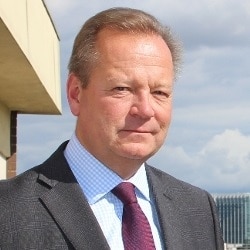
Cree: BSB increases unreasonable
The Legal Services Board (LSB) has approved a 4.5% increase in the practising certificate fee (PCF) for barristers, while warning the Bar Council that the exercise of its regulatory functions, such as setting the fee, “should not be prejudiced” by its representative role.
The Bar Council nonetheless renewed its attack on the increased costs of the Bar Standards Board (BSB), questioning the “timing and necessity” of spending £100,000 on a feasibility study as to whether the BSB should be converted to a separate corporate body.
As the Bar Council is formally the regulator of barristers – even though it delegates that task to the BSB – it is responsible for applying to the LSB for approval of the PCF.
In December, the Bar Council issued a consultation on the PCF, which very unusually said it was publishing under duress as it questioned the case for the proposed sharp rise on the BSB’s budget.
The cost of practising at the Bar will increase 9% in the next financial year, of which half will be met by Bar Council reserves and half by an increase in the PCF
The LSB said in its decision notice that the fact that most of the responses to the consultation were negative “may have been influenced by the introductory remarks” made by the Bar Council as well as the significant increase proposed without “adequate detail about the BSB activities that the PCF income would fund and its benefits”.
By arguing that these increases were “unreasonable”, the Bar Council “may have made it more difficult to secure any positive engagement” by the profession.
“While we recognise that the Bar Council acting as a representative body must be free to form a view on the funding of the BSB, we remind the Bar Council that its exercise of its regulatory functions under the [Legal Services] Act, of which setting the PCF is one, should not be prejudiced by its representative functions.”
The 4.5% increase in the PCF will mean raising nearly £17m in 2022/23, of which just over 70% would be for the BSB, with the rest going to the Bar Council.
With other income, the proposed budget is £21.6m in total, a 10% increase on the current year, of which £14.5m would go to the BSB.
Changes in the banding system for the PCF means there will be no increase in the £100 fee for barristers earning less than £30,000, a 3% increase for those earning from £30,000 to £240,000, and a 9% rise for those who earn over £1.5m.
In deciding to approve the PCF, the LSB noted that its most recent assessment of the BSB found that it lacked the capacity and capability “to meet the performance standards of an effective regulator”.
The application – which had to be revised after the LSB found the first version lacking certain detail – “set out why the additional income was required to address its performance issues and how the PCF funds would be deployed to improve performance”.
In submitting the revised application, Bar Council chief executive Malcolm Cree stressed its criticism that the BSB’s planned spending increases, particularly on extra staff, were unreasonable.
“The profession has given a fulsome and robust response to the PCF consultation, which has clearly been considered but rejected by the BSB, without explanation.”
He argued that the BSB had “set a detailed budget before finalising their strategy and have yet to conduct business planning. These processes are completely the wrong way around”.
Mr Cree also questioned various proposed BSB projects: “Whilst the BSB might wish to consider becoming a separate corporate body, we do not agree with the timing or necessity of such work given the considerable challenges to the BSB’s core duties; nor do we agree with the plan to spend £100k exploring its feasibility.
“The appropriateness of taking regulatory action against unregistered barristers, when their conduct has nothing at all to do with the provision of legal services, seems to us to be a questionable use of resources and a possible place for savings to be made, releasing regulatory resources to more pressing matters.”
But the LSB rejected the Bar Council’s call to recommend “downward revisions to the BSB’s budget where reasonable”.