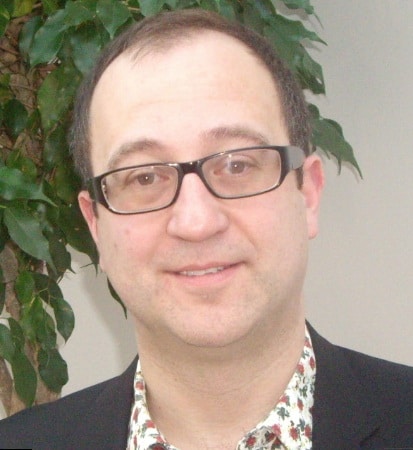
Passmore: “fearsomely complex” part of LSA
The Legal Services Board (LSB) has attacked the Solicitors Regulation Authority (SRA) for having “over-engineered” its approach to regulating multi-disciplinary alternative business structures (ABSs) and to approving non-lawyer owners.
The LSB said the drafting of the SRA’s plans for approving multi-disciplinary practices (MDPs) seemed to “imply a continuing belief that the SRA is the only body that should decide what types of legal and non-legal activities should be regulated, coupled with a high level of risk aversion about non-traditional entities”.
If its reading of the proposals was right, the LSB said it did not consider that in their current form they were likely to achieve the SRA’s aim of increased entry of multi-disciplinary ABSs to the market.
In newly-released papers from its May board meeting, the super-regulator said its “key concerns” were that the SRA started from the principle that it must regulate all non-reserved work.
The SRA set out conditions for agreeing not to regulate non-reserved activities which were “possibly impossible” to meet in all but the largest firms.
Further concerns were that the SRA saw itself as the “best/only judge” of whether another regulator’s arrangements were suitable, and that it proposed to impose other requirements on those already regulated by others, such as having similar indemnity terms and conditions to the SRA.
On non-lawyer owners, the LSB challenged the SRA’s approach to schedule 13 of the Legal Services Act, which sets out the requirements for approving non-lawyer owners and in particular who has a ‘material interest’ that requires approval from the licensing authority.
“It seems to us that the majority of problems appear related to the SRA over-engineering its approach… The SRA’s view is that the schedule’s provisions are prescriptive, and that it has no scope to deviate from them.” But the LSB’s view was that the schedule gives licensing authorities “discretion that the SRA has not used”.
Crispin Passmore, executive director of policy at the SRA, told Legal Futures that the regulator was confident that its proposals on multi-disciplinary ABSs “would not deliver the sort of outcomes they’re worried about”.
“We’ve had long conversations with LSB and said the outcomes we want to achieve are faster and easier access to the legal market for MDPs. This is quite a significant change for us. There is complexity in building the regulatory structure, but not in applying it to any particular case. As long as consumers are clear about it, it’s fine”.
On non-lawyer owners, Mr Passmore said that over the next six months the SRA would be looking to simplify its rules. “This is a fearsomely complex part of the Legal Services Act. If we can simplify how to interpret it, all well and good.”
More broadly, however, the LSB found that the SRA’s overall performance on ABS applications was improving – it now takes an average of under seven months from the submission of an application for a firm to be granted a licence.