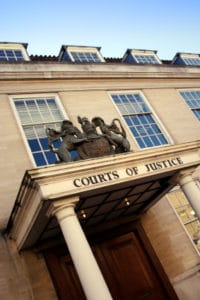
Courts: fees set to rise for those who can afford to pay
Lower-than-expected court fees from high-value cases and increased demand in the criminal justice system are behind the Ministry of Justice’s (MoJ) request for £427m extra funding over and above its designated department spending limit for 2015-16, it has emerged.
Further increases in court fees from those “who can afford to contribute more” were foreshadowed as a result by the ministry’s top civil servant.
The MoJ’s budget has been cut significantly since 2010-11, when it was £8.9bn; the 2013 spending review set it a budget of £6.6bn for 2015-16.
A letter from the MoJ’s permanent secretary, Richard Heaton, to the House of Commons’ justice committee, published yesterday, explained that the new spending estimate was because the spending review settlement agreed in mid-2013 had predicted a “broadly flat” workload.
But, in fact, he continued: “What we have actually seen since 2013 is an increase in demand, driven by increases in the detection and prosecution of serious offences… This increase in demand has put pressure on the prison population and on the requirement for Crown Court sitting days.”
The settlement also assumed extra fee income in the last two financial years, but “fee income has… not matched our expectations”, he said, adding: “This is the result of several factors, including unpredicted volume changes following introduction of enhanced fees in March 2015, delays to timetables for introducing new tranches of fees, scope changes, and decisions not to take forward some changes until 2016-17.”
Mr Heaton was answering questions raised by the justice committee about the ministry’s supplementary estimate indicating it needed £427m in addition to the main 2015-16 spending estimate, which was first published by the justice committee on 1 March.
It revealed that: “The level of income the department has received from court fees has… been lower than assumed at our [2013] settlement, largely because the number of higher-value case types, such as specified and unspecified money claim cases, has been lower than originally anticipated.”
Mr Heaton, a former barrister who replaced Dame Ursula Brennan on her retirement at the head of the ministry last September, said the department had “worked hard” to live within spending limits, but admitted that “a combination of events went against us this year”.
He continued: “As well as the demand and income pressures I have described, we under-delivered against some savings targets. We also incurred some one-off increased costs… Coming together, these factors made our financial position difficult this year.”
Asked how the MoJ would meet its 2015 spending review settlement, which envisaged a 15% – or £1bn – after-inflation saving by 2019-20, Mr Heaton was bullish that the extra funding request would cover costs resulting from the Supreme Court’s 2013 O’Brien judgment on part-time judges’ pensions, and other current outlays.
He indicated that some of the £1bn budget reduction would come from administrative efficiencies. But he added: “Some of it will be achieved by increasing MoJ’s income, by way of fees and charges… [including] from those who can afford to contribute more, so that those who use and directly benefit from the courts pay towards their running costs”.
The remainder of the letter related to the ministry’s court and prison closure and rebuilding programme.