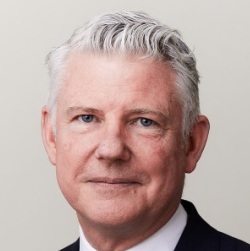
Moloney: Most challenging period in LCM’s history
Troubled funder Litigation Capital Management (LCM) lost A$112m (£58m) in the last six months of 2025 due to two major case defeats and an adverse costs order in a third exceeding its after-the-event insurance cover.
The listed company’s share price has fallen to an all-time low of just 3.9p in the wake of the results for the first half of its financial year.
Last autumn, LCM – which originated in Australia but listed in London in 2018 – announced a strategic review [1] after a string of losses, the options arising from which will be benchmarked against a lean run-off operating model.
Chief executive Patrick Moloney told investors last week that the six months had been “the most challenging period in LCM’s history”, and that the outcome of the review would be announced by the end of the current quarter.
He said the two major losses – one in England and Wales, and the other in Australia – “detracted from… historically a high performance” by the company.
Chief financial officer David Collins said more than 80% of the half-year loss was attributable to the two losses and adverse costs order, meaning that “most of large lumps are in the rear-view mirror”.
LCM has 46 ongoing investments and none are as large as the lost cases. But its net debt reached A$123 by 31 March 2026 and cash generated from concluded investments in whole of 2025 was just A$5m.
While waiting for the outcome of the strategic review, Mr Moloney said, LCM had secured debt covenant waivers and an extension to its capital facility that have “allowed us to continue to manage and invest in our existing portfolio”. It is not currently taking on any new cases.
He has returned to “a very hands-on position in terms of case management”, working with his investment managers to make “some fairly tough investment decisions”, including looking to exit some of them.
As a result, he has rewritten “the entire portfolio in terms of risk and prospects of success”.
LCM made staff redundant last year so as to halve its operating expenses.
While the review could result in going into run-off, Mr Moloney said he hoped it would instead lead to an injection of capital so LCM could “start rebuilding the balance sheet and portfolio”.
He argued that other funders were suffering with single case investments too, pointing – albeit not by name – to last month’s decision in the YPF litigation of the US Court of Appeals for the Second Circuit, which reversed an earlier ruling in favour of Burford Capital’s clients.
The world’s biggest litigation funder – which is listed in both London and New York – could recover $6.2bn (£5bn) from the case if successful but its share price dived 39% on the news.
Burford said that as well as considering options such as seeking a rehearing en banc by the entire Second Circuit – “although statistically the court rarely grants such requests” – and a possible appeal to the US Supreme Court, as an alternative the claimants were “likely to consider seriously the commencement of investment treaty arbitration against Argentina”.
Since 2015, Burford has spent tens of millions of dollars backing a claim brought by Petersen Energia Inversora and Eton Park Capital Management, which were minority shareholders in Argentina’s largest oil and gas company, YPF, at the time it was nationalised in 2012.
The US District Court in 2023 [2] ruled that Argentina failed to make a tender offer for the shares as it was required to do and that this “harmed [the] plaintiffs because they never received the compensated exit” that YPF’s bylaws promised.
YPF’s share value fell sharply and caused Petersen, the largest minority shareholder, with 25%, to become insolvent. Burford forecast damages of around $16bn.
But a majority of the appeal court held that Argentina’s commitment to make a tender offer was not enforceable by the shareholders who relied on it.
The decision is likely to mean a non-cash write-down on Burford’s balance sheet but the company sought to reassure investors that it would have no cash impact, while its core business is unaffected
Chief executive Christopher Bogart said: “Although the outcome was disappointing, we have always treated YPF as separate and apart from Burford’s core business.
“Burford is run on a cash basis, and does not rely, or count on, cash from the YPF case to operate the business; YPF has always been additional to the core business, and we have repeatedly described it that way.
“Our core business is based on a portfolio of many hundreds of valuable cases ― a portfolio we expect to produce more than $5bn in cash proceeds over time and that produced more than $1.2bn in cash in just the last two years.
“We calibrate our commitments and deployments to new business based on our cash on hand – which today exceeds $700m – and our expected cash generation from the portfolio.”
While Burford now has more debt than the level it previously suggested was ideal, Mr Bogart said “we are still not highly leveraged, we have carefully laddered our debt maturities to stretch out over the next eight years, and managing our debt load will be front of mind as we proceed”.
He added: “Given our strong cash position and our expected cash proceeds from our portfolio, we remain confident in our ability to achieve both continued growth and debt rationalisation.”