


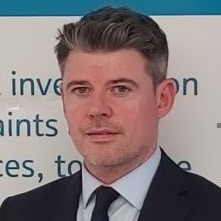
McFadden: Transparency matters
The Legal Ombudsman (LeO) has published three of its final decisions in full for the first time, including the names of the firms involved, arguing that the move increases transparency.
The decisions concern inadequate service in a litigation matter, a private client case and an employment dispute.
LeO restarted work on publishing decisions in full in September last year after a pause of more than two years for operational reasons, saying it was under pressure from the Legal Services Board and Legal Services Consumer Panel to take the step.
LeO said yesterday that publication marked “a renewed commitment to using the powers granted under part 6 of the Legal Services Act 2007, which allow publication of final decisions where there is a clear public interest in doing so”.
Sharing insight into what is going wrong in legal services was “an important tool for improving standards of service where they are failing”, which would “increase the transparency of LeO’s work, help drive up standards, improve accountability, and assist consumers in making better-informed choices”.
Published cases would involve either “systemic failures that indicate a substantial number of consumers will be adversely affected” or “exceptional or severe impact on an individual complainant or group of complainants” or “very serious service failure” or “a significant lack of co-operation”.
In the first case, LeO said it upheld 19 out of 25 issues of complaint made by Mr A against Ansham White, based in North-West London.
“This case was important because there were so many service failings identified throughout the retainer. These included issues in relation to the firm’s preparation of the case for trial, and their representation of Mr A at that hearing. The firm then advised Mr A to embark on what was ultimately a costly and unsuccessful appeal.”
The law firm acted for Mr A in his claim against his local council for damage caused to his property by large trees in the adjoining council-owned park. The claim was partly successful but he was left out of pocket because he failed to beat the other side’s part 36 offer.
Ansham White instructed a barrister who, based “entirely on the firm’s note and recollection of the trial”, advised there were reasonable prospects of success for an appeal. If the firm had any doubt about the accuracy of the note, then a transcript of the trial should be obtained. An appeal was lodged, without a transcript being obtained.
The full transcript was not obtained until significantly later, and the firm did not provide a copy of it to Mr A until about 11 pm the night before the appeal. It showed that the judge had heavily criticised the firm’s preparation for the trial and their representation of Mr A at the hearing. It also showed that there were many inaccuracies in the firm’s note of the trial.
The barrister, who was now representing Mr A at the appeal, said the appeal would now be “difficult and challenging” and that the transcript had weakened the prospects of success. Those concerns were not shared with Mr A by the firm. The appeal was unsuccessful, and Mr A was ordered to pay the other party’s costs.
LeO awarded Mr A compensation of almost £25,500, representing a 75% refund of the trial costs and most of the costs of the appeal, as well as £1,000 for “emotional distress”.
In the second decision, Southampton firm Underwood & Co was instructed to draft a will for Mr C, who “made sure” his long-term partner Mrs B would receive one-fifth of his estate.
The firm acted as executor and Mrs B died almost two years later having received nothing from the estate.
It then “failed or refused” to engage with her executor and daughter, Ms D, before eventually informing her that Mrs B’s estate would receive £17,700.
In fact, it should have received £51,200 but the law firm concluded, “without ever speaking to Mrs B or Ms D, that the wording of the will was not as Mr C intended and they decided that Mrs B’s estate should not receive one-fifth of the value of the house”.
LeO disagreed, saying it was satisfied that the wording of Mr C’s will meant Mrs B should have received a fifth share.
Since LeO’s awards are subject to a cap of £50,000, it could not fully recompense Ms D, but by adding interest it could award her almost £61,000.
In the third case, Mr A and Ms B instructed Anglo-Spanish firm Scornik Gerstein to make a claim against their former employer. They signed a damages-based agreement (DBA), which entitled the law firm to keep 35% of whatever was recovered.
The case settled with the employer paying both compensation and the £36,200 costs payable by the clients. But the firm took a further £36,200 from the compensation under the DBA.
The clients complained that they had paid twice for the same work; the firm argued that the costs recovered were separate, arising from the defendant’s poor behaviour.
“What I’m being asked to follow is that the defendant’s conduct was so poor that a sum equal to the full costs for the work chargeable to the client under the DBA were payable by agreement,” the ombudsman said.
“The clause [in the retainer] that would enable the firm to regard the defendant’s conduct as unreasonable or vexatious was activated, the firm says, but I’ve seen no evidence of this being specified…. I’ve also got nothing to suggest that there was a conduct issue so serious as to warrant a full payment of costs on that scale.”
Even if the firm had the authority to do this, the costs information provided was “well short of the level it should have been at, including failing to tell the clients that the relevant clause in the DBA had been triggered”.
Mr A and Ms B “were entitled to believe that was their debt to the firm paid” by the costs recovery. LeO ordered the law firm to pay back the £36,200 plus interest and an award of £600 for “inconvenience and upset caused”.
LeO said cases for publication would be assessed on a case-by-case basis by the public interest decisions committee of the Office for Legal Complaints, LeO’s governing body. They would be published quarterly on LeO’s website and remain available for 12 months.
Paul McFadden, chief ombudsman, commented: “Our renewed commitment to publishing decisions in the public interest increases the transparency of the complaints system and reflects the critical importance of complaints in supporting improvement and high standards in how legal services are delivered.
“While most legal services are delivered professionally and competently, there are times when things go seriously wrong – and when they do, transparency matters. Publishing decisions in these cases not only helps to protect consumers, it also reinforces standards and ensures accountability.”









I’m amazed that these cases didn’t warrant referral to / investigation by the SRA, who seem all too ready to prosecute firms and individuals over far less serious matters.