


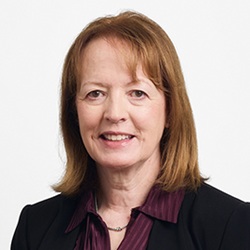
Gilby: Sham case brought against her
Lawyers for Dr Susan Gilby in her landmark whistleblowing claim – which led to the former NHS trust boss receiving £1.4m in compensation – have called on the Legal Aid Agency to remove one of its board members for the “pivotal role” he played in the plot to remove her.
Led by solicitor Ian Radford, a senior consultant at arch.law, the group says Ken Gill’s mistreatment of Dr Gilby, combined with how he destroyed and withheld evidence in this case, proves he is not a fit and proper person to sit on the LAA board.
In a bid to step up pressure on the LAA, which has decided against taking action, Mr Radford stressed that Mr Gill was “publicly shamed” during the four-week tribunal in Liverpool, which revealed significant breaches of the Nolan principles – relating to honesty, integrity and accountability – that public servants like Mr Gill are bound by.
In her judgment, Employment Judge Shotter described Mr Gill as a “key player” in an unlawful plot to undermine Dr Gilby and force her to resign after she became a whistleblower in May 2022.
Judge Shotter said the tribunal found Mr Gill to be an “inaccurate historian” who did not give “credible evidence” on a number of matters; he also gave evidence to the tribunal that was “disingenuous”.
Mr Gill is a chartered accountant who joined the LAA as a non-executive board member in 2023. He was also deputy chairman at the Countess of Chester Hospital NHS Foundation Trust, where Dr Gilby was the CEO until December 2022.
Dr Gilby described the impact on herself as “nothing short of torture at times”. The award of £1.4m, made by the tribunal in January this year, is one of the largest made to an NHS member of staff.
The plot, dubbed Project Countess, began after Dr Gilby raised serious concerns about bullying and patient safety at the hospital in Chester, in the aftermath of the Lucy Letby murders.
Dr Gilby, who was an anaesthetist and intensive care consultant, joined the hospital as medical director one month after Letby’s arrest. She was promoted to chief executive three months later.
Dr Gilby blew the whistle on how the senior management team prioritised financial targets above patient safety, and how aggressive and threatening the trust’s chairman was towards her. The tribunal was told that verbal attacks and “veiled threats” became so intense that Dr Gilby feared for her own safety.
All her concerns were ignored. Instead, chairman Ian Haythornthwaite joined forces with Mr Gill, chief people officer Nicola Price and non-executive director Ros Fallon to orchestrate what the tribunal said was a “sham case” to force Dr Gilby to withdraw her protected disclosure.
Fourteen false allegations were raised about performance and conduct.
When Dr Gilby refused to withdraw her disclosure, she was suspended and locked out of her office and email account. She resigned three days later and launched her claim for unfair constructive dismissal and whistleblowing detriment.
The tribunal took place in late 2024 and revealed that Mr Gill had carried out more covert operations, tampering with evidence that was central to the case and erasing WhatsApp messages.
“Through the actions of Ken Gill, documents were intentionally withheld and/or doubly deleted to present a misleading picture of the claimant and the steps she was taking to improve the first respondent’s performance (the NHS trust) in her capacity of CEO.”
The tribunal found that Mr Gill’s behaviour “fits squarely in the factual matrix flowing from the first protected disclosure and the machinations aimed at destroying the claimant’s professional standing and career”.
Dr Gilby’s case is a personal tragedy but it has wider implications, given how doctors from the neonatal unit at the Countess of Chester Hospital – who tried to blow the whistle on Letby – were silenced.
The tribunal showed that Project Countess cast a shadow over the inquiry into the Letby murders.
Dr Gilby planned to admit the hospital’s mistakes in the Letby case when she spoke at the Thirlwall inquiry. Dr Gilby said this was met with “a great deal of resistance”, and she was put under pressure to share documents from the murder investigation, which the police had asked Dr Gilby to keep locked away in her office.
The police only dealt with Dr Gilby, not the senior management team.
Roger Kline, a research fellow at Middlesex University and a leading expert on NHS working culture, told Legal Futures: “This was an NHS trust in deep moral crisis following the revelation of multiple baby deaths.
“Dr Gilby was widely seen as an excellent CEO, leading this trust towards recovery, learning from its mistakes and being open about what went wrong. Those who drove her out thought the opposite and sought to evade transparency.
“The bullying and victimisation Dr Gilby experienced is unforgiveable. She is precisely the type of leader the NHS needs, and it is shameful how she was treated. But there appears to be no accountability for Mr Gill – a very poor reflection on the Legal Aid Agency.”
After the judgement, Mr Haythornthwaite, Mr Gill, Ms Price and Ms Fallon all left the NHS trust. None, apart from Mr Gill, continue to work in public life.
Mr Gill remains on the LAA board, earning up to £15,000 a year, for 20 days work.
He is chair of its audit and risk assurance committee, which ensures that the LAA operates transparently and complies with government standards.
Despite multiple efforts to contact Mr Gill, Legal Futures did not receive any response.
An LAA spokesperson told Legal Futures: “Following a thorough review and careful consideration of the code of conduct for board members of public bodies, Mr Gill was found fit to continue his role at the LAA.”
The LAA confirmed that Nick Campsie, the LAA’s chair, along with Jane Harbottle, its chief executive, concluded there were no concerns with respect to Mr Gill’s suitability for public office, his integrity or performance.
Undeterred, Dr Gilby’s lawyers and supporters are stepping up their calls for Mr Gill to be dismissed.
Mr Radford told Legal Futures: “The employment tribunal’s comments about Mr Gill, and the evidence he gave at the trial of Dr Gilby’s claim, almost speak for themselves.
“Mr Gill’s actions, during the execution of Project Countess, and during the trial itself, all caused serious harm. They contributed in large part to the destruction of Dr Gilby’s confidence in her own professional abilities, they seriously damaged her health and they withered her belief in the ideals of public service.
“Against this background, many members of the public would be surprised to hear that the Legal Aid Agency has concluded that someone such as Mr Gill, who has been shamed in a publicly accessible judgment, remains a person suitable to hold high office within the agency; and about whose integrity there are, supposedly, no concerns.
“The Nolan principles of public life can rarely have felt so unobserved or unenforced as they have been in this case. The idea of personal accountability for wrongs committed in public office still seems to remain little more than an illusion.”











