


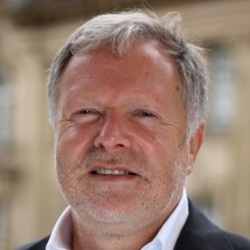
Cooke: Everyone can copy what we do, but they can’t copy our culture
The boss of leading fee-share firm gunnercooke has described how the firm brushed off weekly approaches from private equity investors and instead opted for family ownership.
Executive chair Darryl Cooke said private equity would “damage the culture of the organisation” and listing on the stock exchange “even more so”.
Family ownership, by contrast, offered “flexibility, autonomy and longevity”.
Mr Cooke owns the majority of shares in the law firm, with co-founder Sarah Goulbourne owning the rest, apart from around 2% owned by a private individual.
Last week, it moved into new headquarters in Manchester, which includes a TV production studio. It is just around the corner from gunnercooke’s not-for-profit bookshop, House of Books & Friends, whose goal is to combat social isolation and loneliness.
Mr Cooke said he had spent three years looking at the different options for ownership and had not completely ruled out employee ownership or private equity taking a minority stake if it had “the same culture as we do”.
However, he said: “We put the culture and people in this organisation before anything else. Private equity would damage that and listing even more so… Everyone can copy what we do, but they can’t copy our culture.”
Another of the big fee-share firms, Setfords, is on its second round of private equity ownership.
Mr Cooke was a commercial lawyer specialising in private equity before he founded gunnercooke, and said this may have increased the number of approaches the firm had received – on a weekly basis earlier in the year.
He said listing – like Keystone Law, yet another of the big fee-share firms – would mean “a lot of people who don’t understand the business” putting the firm “ even more under the microscope” than it would be with private equity.
“I really enjoy what I do and I don’t want to get into a situation where I don’t have that. I love the longevity of family ownership.
“It gives us far more flexibility. We are not bound by legacy systems and structures. I spend a lot of time with family businesses, learning from them. The benefits of family ownership are flexibility, autonomy and longevity.”
Mr Cooke said his sons Ashley and Hayden were appointed chiefs of staff at gunnercooke last year, along with James, the son of Ms Goulbourne.
All three of them are in their early 30s and said “they wanted to come into the business”; they were “ambitious to take it forward over the next 30 years”.
Mr Goulbourne, a former investment banker at JP Morgan, heads gunnercooke’s US operations. Ashley Cooke, a former management consultant with an MSc in biodiversity and conservation, became sustainability manager at gunnercooke earlier this year. Ashley also runs the family farm in Herefordshire, which is rewilding.
Hayden Cooke trained at Slaughter and May before going in-house at communications and climate change startups. Based in London, he is chief of staff of gunnercooke’s UK and European offices.
The law firm has 600 lawyers, 300 other staff and 16 offices, five of which are in Germany, two in Austria and one in Switzerland.
Having opened in New York and Chicago, Mr Cooke said the firm was in the process of opening in California. He said its approach was always the same – once the new office started making a profit, the firm would open another.
He said gunnercooke had been growing over the last few years at an annual rate of 15-20%, which would continue or accelerate as it expanded in the US.
Mr Cooke said he found artificial intelligence “incredibly exciting” because it allowed “people to be the lawyers they wanted to be” by removing “a lot of the drudgery”; gunnercooke was the first fee-share firm to sign up to Legora.
It did create challenges for young lawyers, but the firm could adapt to this by recruiting lawyers with fewer years of post-qualification experience, perhaps seven or eight, and “provide a space for them to develop their careers”.











