


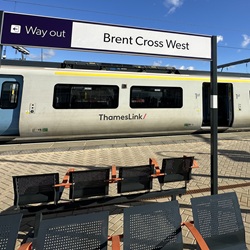
Thameslink: Courts have long accepted lay prosecutors
A judge has rejected a Mazur-inspired attempt to throw out charges against a serial rail fare dodger on the basis that they were brought by lay prosecutors for the train company.
District Judge Tempia held that prosecutors employed by Govia Thameslink Railway (GTR) had the power to commence proceedings and so were exempt persons under the Legal Services Act 2007.
In any case, she said, such was the longstanding use of lay prosecutors in such cases that “the court has granted rights of audience through practice and convention”.
Charles Brohiri was charged with 115 offences of fare dodging. In 39 of them, the applications for summonses were made by lay prosecutors.
Citing Mazur, his counsel argued that laying an information and applying for a summons constituted reserved legal activities of conducting litigation and rights of audience – the lay prosecutors were not legally qualified and GTR was not an authorised legal services provider.
As a result, the proceedings were null and void ab initio, while the prosecutors had committed a criminal offence under section 14 of the Act.
GTR submitted that Mazur was not relevant because the Act provided that a non-authorised person has the right to conduct litigation in relation to the proceedings granted or under an enactment,
The enactment was the Criminal Procedure Rules, which provide at rule 46.1(2): “A member, officer or employee of a prosecutor may, on the prosector’s behalf – (a) a serve on the magistrates’ court officer, or present to a magistrates’ court, an application for a summons or warrant under section on 1 of the Magistrates’ Courts Act 1980; or (b) issue a written charge and requisition, or single justice procedure notice, under section 29 of the Criminal Justice Act 2003.”
DJ Tempia agreed, applying a “broad definition of enactment”. The rules were made by the Criminal Procedure Rules Committee, which derived its power from the Courts Act 2003 and other legislative provisions.
“Therefore, I agree that a lay prosecutor can commence proceedings. They are exempt persons and Mazur has no relevance in this case.”
Even if there had been a breach of the Legal Services Act, she added, the prosecutors had a defence to the criminal offence of conducting a reserved activity without authorisation.
Section 14 provides that a person did not commit the offence if they did not know and could not reasonably have been expected to know that one was being committed. Here, the judge said, “there has been an industry wide use of non-authorised employees to lay informations which has been a longstanding process”.
Further, the judge said the proceedings would not have been a nullity, citing the Court of Appeal’s 2018 ruling in Ndole Assets.
“Following this authority, I agree with the prosecution’s analysis that it was not Parliament’s intention and I agree that it was GTR’s understanding that those individuals addressing the court were permitted to do so because of the long-standing practice in the magistrates’ court allowing them to conduct advocacy.
“The court has been aware of this arrangement for many years, and I agree it is arguable that in these circumstances the court has granted rights of audience which would fall into the schedule 3 exemptions.
“Here, the conduct of rights of audience has been available after years of appearing in the magistrates’ court without a formal application being made every time and it appears to me that the court has granted rights of audience through practice and convention.”
DJ Tempia went on to reject the defence arguments that the Criminal Procedure Rules were not followed when applying for the summons, and that there had been an abuse of process.
According to press reports, Mr Brohiri went on to plead guilty to dozens of offences.











