


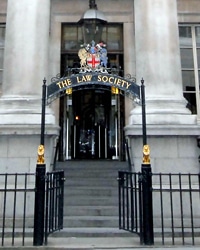
Law Society: Mandatory reaccreditation
A London-based law firm has filed a claim for judicial review against the Law Society’s decision not to reaccredit a solicitor who had been on its mental health panel for nearly a decade.
Rebecca Hill of GT Stewart told Legal Futures that the decision meant she has had to stop working in an area about which she is “passionate”, and longstanding clients have had to find new representation.
Ms Hill first joined the society’s mental health accreditation scheme in 2008. From August 2014, it has been a requirement of the Legal Aid Agency that all publicly funded representatives before the Mental Health Tribunal are members of the scheme.
Reaccreditation is mandated every three years. Members have to provide four case reports, compiled from cases completed during the past 12 months, and show that they have completed at least six hours of structured professional development (PD) in the field of mental health law in each of the previous three years.
Ms Hill applied last June. The Law Society rejected the application in September on the basis that the 16 hours of PD she had carried out each year did not include six hours of sufficiently targeted learning in mental health law-related areas. Her internal appeal was rejected in January.
The application for judicial review claims that the society has not published detailed guidance on what areas are accepted to be mental health law-related.
But it points out that, in the society’s published ‘expected standards of competence’, applicants are expected to have sufficient knowledge of areas of law, such as mental capacity, community care and human rights, which are relevant to advising and representing clients in proceedings before the First-tier Tribunal.
It maintains that the courses Ms Hill undertook “came squarely” within these competencies and that the Law Society’s decision to refuse her application for reaccreditation was unlawful.
A Law Society spokesman said: “We have received a pre-action protocol letter and are aware a claim is being issued. We will not be commenting further at this time.”
The society has found itself in hot water over its training operation regularly in the past year.
Last May, the Competition Appeal Tribunal ruled that the society was guilty of an abuse of a dominant position over training arrangements for the Conveyancing Quality Scheme and in November the Advertising Standards Authority found that its marketing of the same scheme was misleading.
In January, the society was forced to withdraw from an exclusive deal to endorse a training partner for the qualified lawyers transfer scheme after facing a judicial review from another provider.
We also revealed that the Law Society was creating a new quality and standards in education committee.











If being a solicitor is not, on its own, sufficient for mental health cases, why not for conveyancing. In my view there is little worse than having to deal with a matrimonial lawyer who thinks that he or she can deal with the property aspects of a breakdown withoput any experience in or knowledge of the subject